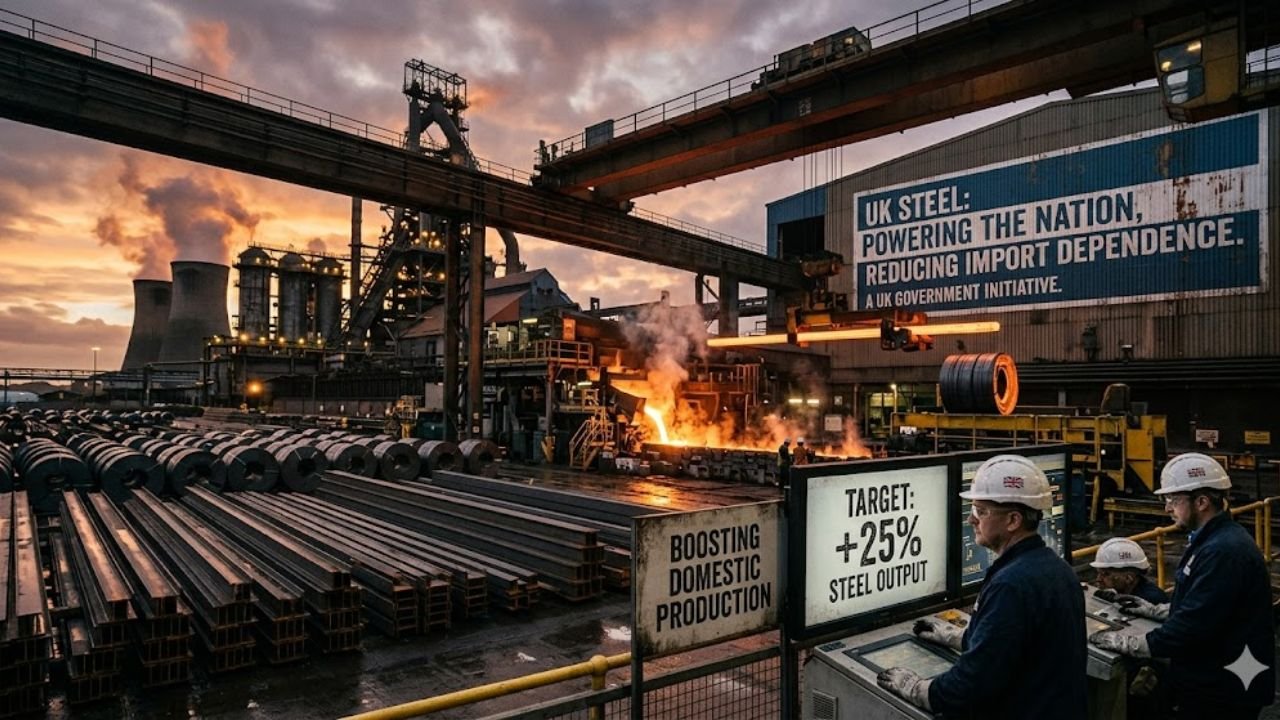
The UK government has introduced a new steel strategy that marks a significant transformation in British industrial policy. Driven by changing global political conditions and the need for supply chain resilience, the government aims to substantially increase domestic steel production by 2030. This strategy is not about preserving an outdated sector but about safeguarding key industries such as construction and automotive from global supply disruptions.
The policy emphasizes reducing dependence on imported high-carbon steel while enabling domestic production that is both ethical and sustainable. Through a mix of financial support, energy subsidies, and the implementation of the Carbon Border Adjustment Mechanism (CBAM), the UK aims to ensure competitiveness while transitioning to low-emission production methods.
Strengthening Infrastructure and Domestic Supply Chains
Steel remains a cornerstone of the UK economy, and the government is prioritizing its role in national infrastructure. From urban construction in Manchester to offshore wind farms in the North Sea, demand for high-quality steel continues to rise. Historically reliant on imports, the UK faced vulnerabilities during the COVID-19 pandemic, which exposed weaknesses in global supply chains.
In response, the Department for Business and Trade has introduced a framework promoting the use of domestically produced steel in publicly funded infrastructure projects. This “British-first” approach is designed to boost local production while aligning with upgrades to the national grid, ensuring steel plants have access to reliable and affordable energy.
Transition to Green Steel and Advanced Technologies
A key pillar of the strategy is the shift away from traditional coal-based blast furnaces toward Electric Arc Furnace (EAF) technology. EAFs use electricity to recycle scrap metal, significantly reducing carbon emissions. This transition is essential for meeting the UK’s Net Zero targets and enhancing sustainability in manufacturing.
Major industrial hubs such as Port Talbot and Scunthorpe are being modernized with renewable energy integration. This positions the UK as a leading producer of green steel, meeting growing international demand driven by stricter emissions regulations, particularly around Scope 3 emissions.
Production Targets and Economic Impact
The UK steel industry has outlined ambitious growth targets. Domestic crude steel production is expected to rise from 5.6 million tonnes to 7.2 million tonnes by 2026, with a goal of 10.5 million tonnes by 2030. Import dependency is projected to drop from 62% to 30%, while the share of green steel production will increase from 12% to 75%.
Employment in the sector is also expected to grow, increasing from 33,500 to approximately 41,000 jobs. These developments are aimed at strengthening economic security and protecting domestic producers from unfair international competition, including dumping practices.
Carbon Border Adjustment and Fair Competition
The introduction of the UK’s Carbon Border Adjustment Mechanism ensures that imported steel is subject to the same carbon costs as domestically produced steel. This creates a level playing field and prevents domestic manufacturers from being disadvantaged due to their investment in cleaner technologies.
By stabilizing local supply chains, the policy also supports long-term production needs in critical sectors such as defence and aerospace, where consistency and reliability are essential.
Job Creation and Skills Development
The strategy extends beyond production to include workforce development. New steel plants are being designed as innovation hubs, offering employment opportunities in advanced manufacturing, carbon capture, and industrial AI. These facilities aim to revitalize communities historically dependent on steel production.
Investment in training centres and apprenticeship programs reflects a commitment to equipping workers with the skills needed for modern industrial roles. This ensures that technological advancement translates into tangible economic benefits for local populations.
Future Outlook and Industrial Leadership
As the UK approaches the end of the decade, the success of this strategy will depend on balancing increased production with sustainability. The government’s proactive role in supporting the industry signals a shift toward long-term industrial planning and investment.
If the outlined targets are achieved, the UK will not only secure its domestic needs but also establish itself as a global leader in green steel production. This approach could serve as a model for other post-industrial nations seeking to rebuild their manufacturing base in the modern era.
FAQs
Q1 Why is steel production a priority for the UK government?
The focus is driven by the need for economic resilience and national security. Reducing reliance on imports protects businesses from global supply disruptions and ensures access to essential materials for infrastructure and industry.
Q2 What is green steel and why is it important?
Green steel is produced using low-emission technologies such as Electric Arc Furnaces powered by renewable energy. It plays a critical role in helping the UK meet climate targets while meeting global demand for sustainable materials.
Q3 How will this strategy affect employment?
The transition is expected to create thousands of new jobs across advanced manufacturing, engineering, and digital sectors, supporting economic growth and revitalizing traditional industrial regions.