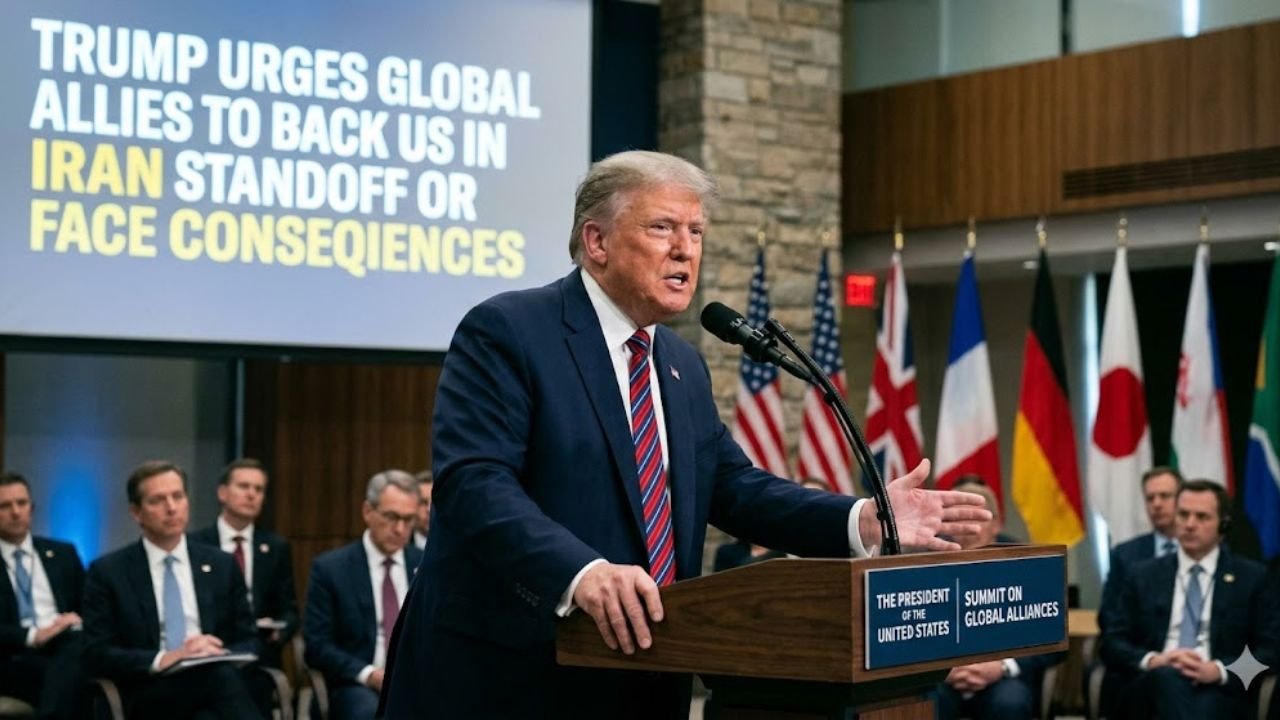
As of March 2026, the geopolitical world is mostly focused on the precarious situation regarding conflict between the United States and Iran. President Donald Trump, now serving his second term, is framing this confrontation as a major conflict where diplomacy is taking a back seat to strategic pressure. The administration has issued strong warnings to global allies, urging them to support the U.S. military operation named “Operation Epic Fury.”
The message from Washington is increasingly clear: nations are either “with us or against us.” The approach revives the pressure strategy Trump previously used against Iran during 2018, when sanctions and diplomatic isolation were applied to weaken Tehran’s position. The current administration believes the Iranian government may be vulnerable following recent leadership changes.
However, European and Asian allies are approaching the conflict with caution. Many governments emphasize their strategic independence and prefer not to align automatically with U.S. military action. As the conflict enters its third week, the White House has indicated that neutrality will no longer be considered an acceptable position.
The Strategic Importance of the Strait of Hormuz
During a recent statement aboard Air Force One, President Trump highlighted the strategic importance of the Strait of Hormuz. The waterway is one of the world’s most critical shipping routes, carrying approximately 20% of the global oil supply. Trump argued that it is unreasonable for American taxpayers and military personnel to bear the sole responsibility for securing such a vital international passage.
According to a U.S. diplomat speaking anonymously, the administration is considering “secondary consequences” for countries that continue to trade with Iran. These measures could include economic penalties unless nations contribute naval assets to the coalition currently operating in the region.
The situation has created tensions within NATO. President Trump warned that if allies refuse to participate in the operation, the alliance could face a “very bad future.” For many countries, the decision is complicated: direct participation may trigger retaliation from Iran, while refusal could risk economic sanctions or reduced security cooperation with the United States.
Global Economic and Security Impact
Recent global economic metrics highlight the growing impact of the crisis. As of March 2026, Brent crude oil prices have reached $106.11 per barrel and could climb to between $120 and $150 within the next month. Traffic through the Strait of Hormuz has dropped to approximately 85% of normal levels, and analysts warn that a functional blockade could occur within 30 days.
The military campaign itself is also expensive. Operation Epic Fury has already cost $16.5 billion and could rise to $31.5 billion within a month. Meanwhile, global inflation is projected to increase by 0.5% initially and potentially reach 1.2% if the conflict continues.
Shipping insurance premiums have also surged dramatically, rising by more than 400% and potentially increasing to 1000% if tensions escalate further. These developments are already affecting global supply chains and commodity markets.
The “Epic Fury” Doctrine
The so-called “Epic Fury” doctrine represents a shift in American military strategy. Unlike the prolonged conflicts of the early 2000s, which relied on extended deployments and low-intensity engagements, this doctrine focuses on short-duration, high-intensity operations designed to achieve rapid strategic outcomes.
Under this approach, the United States is prepared to use force as a diplomatic tool. Potential measures include surgical strikes against Iranian nuclear facilities and internal security structures if negotiations fail.
One example frequently mentioned by analysts is the Kharg Island oil terminal, a critical hub for Iran’s petroleum exports. Targeting such infrastructure would severely limit Iran’s ability to generate revenue from global energy markets.
The intention behind this strategy is to signal that the economic and political costs of defiance will outweigh any benefits for Iran’s leadership.
Regional Tensions and Middle Eastern Allies
The confrontation has also intensified tensions across the Middle East. Gulf nations such as Saudi Arabia, the United Arab Emirates, and Qatar find themselves in a difficult position. These countries host U.S. military forces while simultaneously facing drone and missile attacks attributed to Iranian-aligned groups.
The Trump administration has expressed surprise at the scale of Iranian retaliation and has urged regional allies to assume greater responsibility for defensive operations.
Leadership changes in Tehran have further complicated the situation. Mojtaba Khamenei’s rise to the position of Supreme Leader has introduced uncertainty regarding Iran’s strategic direction. Washington has stated that the new leadership will not be recognized unless Iran agrees to terms described as “unconditional surrender,” effectively closing many traditional diplomatic channels.
The Future of the International Order
Many analysts believe the confrontation could reshape the global political landscape. By threatening consequences for allies who remain neutral, the United States is signaling a shift toward a more unilateral approach to global security.
The response from other nations has been mixed. Some countries, particularly the United Kingdom and several Eastern European states, have provided limited military assistance. Others, including several Eurozone nations, are exploring mechanisms to bypass U.S. dollar-based sanctions in order to secure energy imports.
This divergence reflects a broader contradiction in global power dynamics. Some nations rely heavily on the U.S. security umbrella, while others are increasingly wary of being drawn into conflicts driven by American strategic priorities.
FAQs
Q1 What has Trump threatened allies with?
The administration has indicated that economic measures could be imposed on countries that continue trading with Iran. These may include heavy tariffs and the possible reduction of security cooperation or NATO prioritization.
Q2 What has Iran threatened in response?
Iran has warned it may implement a “hedgehog strategy,” which involves targeting coalition shipping and potentially blockading the Strait of Hormuz to disrupt global trade.
Q3 Is a peaceful outcome possible?
While President Trump has suggested privately that Iran may be interested in negotiations, he has insisted that any new agreement must be significantly stronger than previous deals.