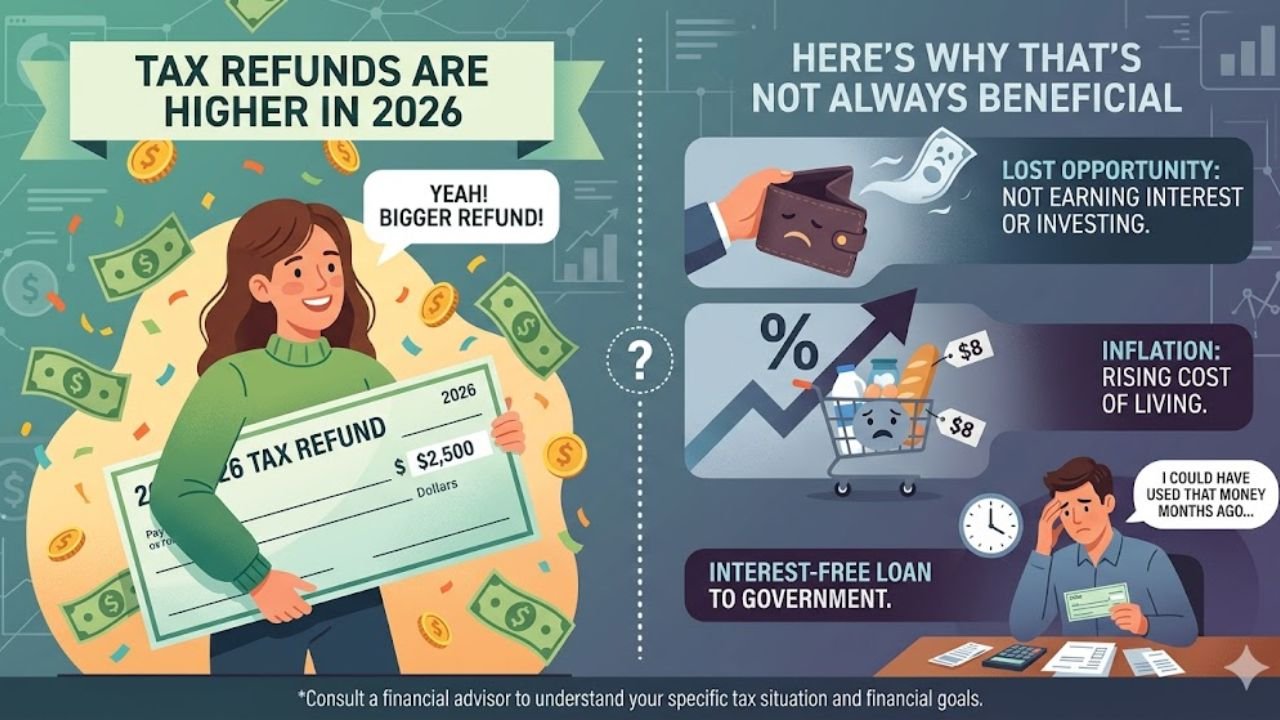
The 2026 tax season has seen a notable increase in tax refunds, with the average refund rising to $3,742—over 10% higher than last year. While receiving a larger deposit feels satisfying, it’s important to understand that this isn’t “new” money. These refunds reflect the interest-free loan employees effectively give the government when too much tax is withheld during the year.
The primary driver behind these larger refunds is the One Big Beautiful Bill Act (OBBBA) of 2025. This law introduced retroactive tax cuts and expanded deductions that weren’t reflected in payroll withholding tables. As a result, employees were taxed at higher rates than necessary during part of 2025, and the IRS is now refunding the excess payments.
Key Changes in 2026 Tax Season
- Larger standard deductions
- Expanded Child Tax Credits
- New deductions for overtime pay, tips, and interest on auto loans for cars made in the USA
- A new $6,000 deduction for seniors
Because these changes were signed into law mid-2025, payroll systems and withholding tables did not reflect them, meaning employees overpaid taxes. The resulting “surge” in refunds is simply the government correcting this overpayment.
Opportunity Cost of Tax Refunds
Receiving a large tax refund may feel like a windfall, but it represents a missed financial opportunity. For example, an average refund of $3,700 could earn roughly $150 in a basic savings account over a year. Instead of using that money immediately for emergencies, high-interest debt, or investments, taxpayers effectively lend it to the government without interest.
2026 vs. 2025 Tax Refund Statistics
| Category | 2025 Tax Season | 2026 Tax Season | Change |
|---|---|---|---|
| Average Refund Amount | $3,382 | $3,742 | +10.6% |
| Total Amount Refunded | $124.8 Billion | $136.6 Billion | +9.4% |
| E-Filing Web Visits | 191.7 Million | 287.2 Million | +49.8% |
| Claims for Senior Deductions | N/A | 9.2 Million | New for 2026 |
Behavioral and Financial Impacts
Behavioral economists note that people often treat tax refunds as windfalls, spending them on luxuries rather than budgeting carefully. This can be risky, especially during inflationary periods when rent and food costs are rising. Large refunds can create a false sense of financial freedom and reduce monthly savings discipline.
To avoid this, employees can adjust their withholding using the W-4 form. Estimating taxes correctly allows individuals to keep more money throughout the year, pay down debts, and invest instead of waiting for a large, delayed refund.
FAQs
Q1 Why did my tax refund increase so much this year?
The increase is largely due to the One Big Beautiful Bill Act (OBBBA), which introduced new tax-free overtime, tips, and tax-free interest on certain auto loans.
Q2 Is it better to have a government tax refund or a higher paycheck?
From a financial standpoint, a higher paycheck is better. Tax refunds are essentially a zero-interest loan you give to the government.
Q3 Can I still change my 2026 taxes?
Yes. You can update your withholding anytime by filing a new W-4, improving your pay and keeping extra money in your pocket throughout 2026 rather than waiting for a large 2027 refund.