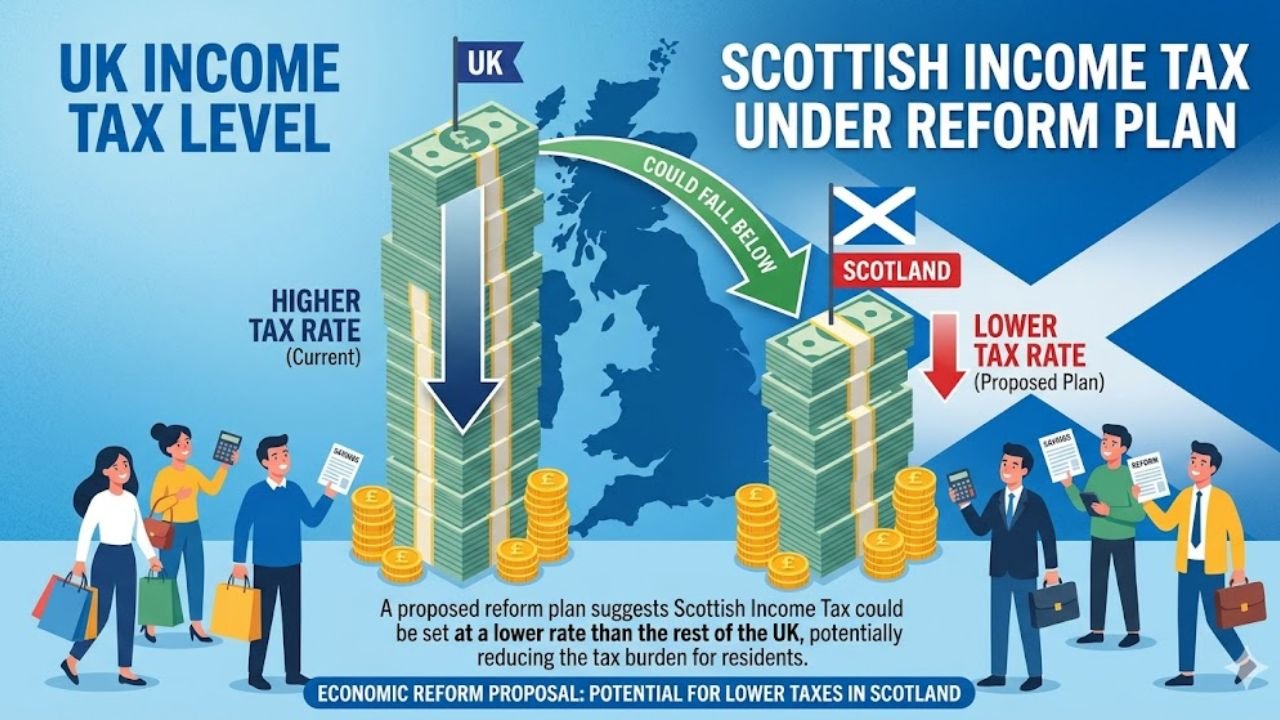
The Scottish Government is attempting to redefine the fiscal relationship between Holyrood and Westminster by introducing a new budget for the 2026–27 tax year. Central to this strategy is a proposal designed to ensure that around half of Scottish taxpayers will pay less income tax than those in the rest of the United Kingdom. This marks a notable shift away from Scotland’s traditional approach of imposing relatively higher taxes on middle and higher earners.
The reform aims to provide targeted relief to low- and middle-income households. By increasing the Starter and Basic rate thresholds by 7.4%—a figure above expected inflation—the government intends to shield a large segment of the workforce from rising living costs. This policy reflects a broader political objective: maintaining public service funding while limiting widespread tax increases.
Balancing Public Spending and Electoral Strategy
This reform represents a calculated political trade-off. By offering modest tax relief to the majority, the government seeks to secure public support while still generating sufficient revenue for essential services. It demonstrates how taxation policy is being used as both an economic tool and an electoral strategy.
Updated Tax Thresholds for 2026–27
According to official forecasts, the break-even point—where Scottish taxpayers begin paying more than their counterparts elsewhere in the UK—is expected to improve. The Starter rate threshold will rise to £16,537, while the Basic rate will extend to £29,526. As a result, approximately 55% of taxpayers earning below £33,500 are projected to pay less tax compared to the rest of the UK.
This structure reinforces a more progressive taxation system, reducing the burden on lower-income groups while maintaining higher contributions from those with greater earnings. Meanwhile, Advanced and Higher rate thresholds will remain unchanged until 2029, ensuring stability in upper tax bands.
The Impact of Fiscal Drag
Despite these benefits, rising wages due to inflation may push many middle-income earners into higher tax brackets more quickly—a phenomenon known as “fiscal drag.” Professionals such as teachers and senior nurses may find themselves entering the 42% Higher rate sooner than their counterparts elsewhere in the UK.
With the Personal Allowance frozen at £12,570 across the UK, differences in tax band structures become more pronounced. While the UK system appears flatter, Scotland’s stepped approach creates varying impacts across income levels.
Comparative Tax Burden Across the UK
For individuals earning above £33,500, Scotland’s system becomes noticeably more expensive. For example, someone earning £50,000 in Scotland could pay nearly £1,500 more in income tax compared to someone earning the same salary elsewhere in the UK. This is largely due to Scotland’s 42% Higher rate starting at £43,663, compared to the UK’s 40% rate beginning at £50,270.
This disparity has raised concerns among businesses and professional groups about Scotland’s ability to attract and retain high-skilled workers. While low earners may benefit from modest savings of up to £40 annually, critics argue that the system places excessive pressure on the “squeezed middle.”
Revenue Generation and Public Services
The Scottish Government maintains that the additional revenue—estimated at £1.8 billion more than if UK rates were applied—is essential for sustaining public services. This includes funding the NHS and maintaining policies such as free university tuition. The Scottish Fiscal Commission projects total income tax revenues to reach approximately £21.5 billion in 2026–27.
Economic Risks and Behavioral Responses
The long-term success of this model depends on economic behavior and income growth. A significant risk is “tax flight,” where high-earning individuals relocate to lower-tax regions. If this occurs at scale, it could undermine revenue projections and economic stability.
To mitigate these concerns, the government has combined income tax reforms with business rate relief and a pause on new property taxes. However, new Council Tax bands targeting properties valued above £1 million are expected by 2028, shifting more of the tax burden toward wealth and assets rather than income.
Political Outlook and Strategic Positioning
With the 2026 Holyrood elections approaching, the government is likely to emphasize the narrative that a majority of citizens will pay less tax. This supports its broader goal of demonstrating the benefits of devolved tax powers and building a distinct economic identity for Scotland.
Conclusion: A Progressive but Delicate Balance
The 2026–27 tax reforms highlight Scotland’s attempt to create a more progressive and socially focused tax system. While lower-income households receive modest relief, higher earners face increased contributions. The challenge lies in maintaining a balance that supports public services without discouraging economic growth or investment.
As the policy takes effect, its impact on household finances, workforce mobility, and overall economic performance will be closely monitored. Both supporters and critics will be watching to see whether this approach delivers long-term sustainability.
FAQs
Q1 Who will pay less tax in Scotland?
Approximately 55% of Scottish taxpayers earning below £33,500 are expected to pay less income tax than those in the rest of the UK. The maximum saving is estimated at around £40 per year.
Q2 At what income do you start paying more tax?
The break-even point is £33,500. Earnings above this level generally result in higher tax payments in Scotland compared to England, Wales, and Northern Ireland.
Q3 What is the Advanced Rate?
The Advanced Rate applies to income between £75,001 and £125,140 and is set at 45%. It was introduced to create a smoother progression between the Higher and Top tax rates.