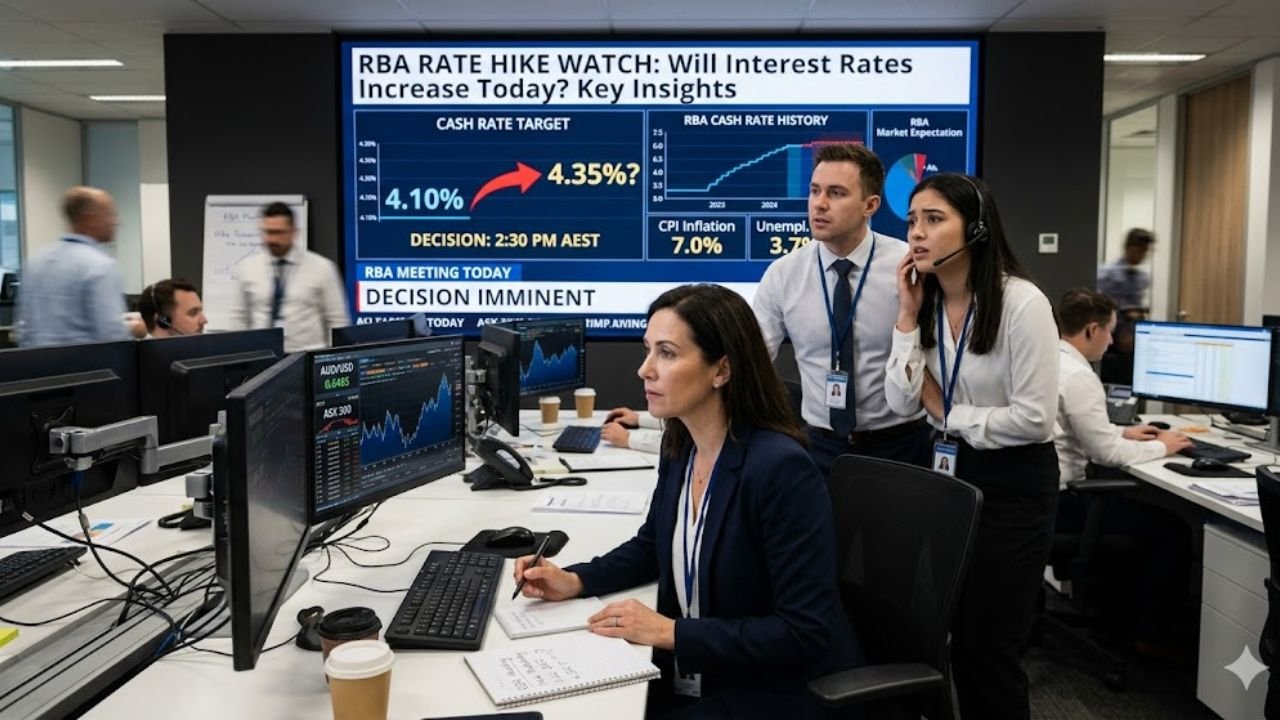
As the Reserve Bank of Australia (RBA) wraps up its March 2026 monetary policy meeting, it finds itself at a critical junction. For millions of Australian households and business owners, the question of whether interest rates will rise again goes beyond macroeconomic theory—it carries real implications for both medium and long-term financial planning.
After a prolonged period of stability, the Australian economy is once again under pressure from stubborn inflation and renewed global supply chain disruptions. While the RBA’s primary mandate remains maintaining inflation within the 2% to 3% target band, policymakers must now carefully balance domestic demand with rising external inflationary pressures.
The Case for a March Rate Hike
January inflation data surprised markets by remaining stickier than expected, strengthening the argument for another rate hike. Although headline inflation has moderated from previous highs, it remains elevated enough to make a return to target levels challenging.
Australia’s domestic economy continues to exhibit price stickiness, largely driven by a tight labor market and persistently high service costs. These factors complicate the RBA’s task of bringing inflation under control without causing economic disruption.
Additionally, global instability—particularly in the Middle East—has driven up oil prices, increasing transportation and energy costs. These supply-side pressures contribute directly to inflation while simultaneously reducing household disposable income.
If the RBA concludes that current policy settings are insufficient to curb inflation, it may opt to raise the cash rate further to 4.10%, following February’s increase to 3.85%.
Cash Rate Outlook for 2026
Understanding the trajectory of the official cash rate helps contextualize the current decision. After multiple pauses in late 2025, the RBA resumed tightening as economic data indicated that inflationary pressures were persisting.
| Meeting Date |
Decision |
New Cash Rate Target |
| November 2025 |
No Change |
3.60% |
| December 2025 |
No Change |
3.60% |
| February 2026 |
Increase (0.25%) |
3.85% |
| March 17, 2026 |
Awaiting Decision |
4.10% (Projected) |
Impact on Mortgages and Household Spending
For the average Australian homeowner, another rate hike would intensify the ongoing cost-of-living pressures. Many borrowers are already operating near their financial limits, and even a 0.25% increase could translate into hundreds of dollars in additional annual mortgage repayments.
As debt servicing costs rise, households are likely to cut back on discretionary spending. This reduction in consumption is precisely what the RBA aims to achieve in order to bring inflation under control.
However, the central bank faces a delicate balancing act. Reducing demand too aggressively could slow economic growth and potentially increase unemployment—outcomes the RBA is keen to avoid.
RBA’s Policy Dilemma
The RBA’s challenge lies in managing inflation without triggering a broader economic downturn. Policymakers must decide whether to tolerate higher inflation for longer or risk slowing growth through tighter monetary conditions.
If the RBA believes inflation will sustainably return to the 2–3% target band by 2027, it may adopt a more cautious, “wait and see” approach. Conversely, if inflation risks remain elevated, a more hawkish stance is likely.
Market reactions will not only depend on the rate decision itself but also on the tone and guidance provided in the RBA’s statement.
FAQs
Q1 What time does the RBA announce its decision?
The RBA typically announces its monetary policy decision at 2:30 pm (AEDT/AEST) on the Tuesday of its scheduled board meeting.
Q2 What does a rate hike mean for savings?
When the RBA increases the cash rate, banks usually respond by raising interest rates on savings accounts and term deposits, benefiting savers.
Q3 Why raise rates if inflation is already falling?
Even if inflation is declining, the RBA may continue raising rates to ensure it returns to target levels sustainably. Premature easing could risk inflation becoming entrenched above the desired range.