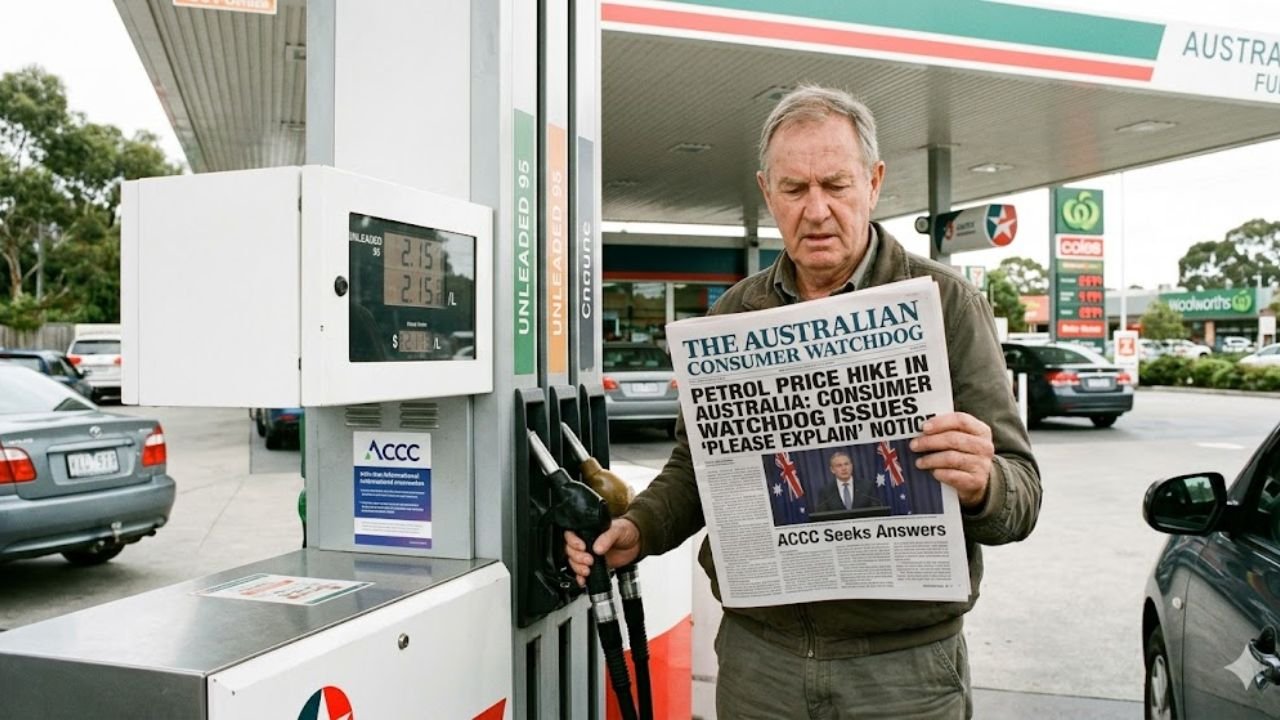
Drivers across Australia are dealing with rapidly increasing fuel prices, creating extreme volatility and uncertainty in the market. In response to the sudden spike in retail petrol prices, the Australian Competition and Consumer Commission (ACCC) has issued an official “please explain” notice to the country’s largest fuel companies.
The move comes as regular unleaded petrol prices have climbed to around $2.20 per litre in many Australian cities. The increase has been largely attributed to rising international crude oil prices caused by geopolitical instability, particularly the ongoing conflict in the Middle East.
While global oil price increases have historically affected Australian petrol costs, the speed at which local fuel stations raised prices has triggered consumer anxiety and regulatory scrutiny.
The Importance of Transparency
ACCC Commissioner Anna Brakey described the recent increases as “steep and rapid,” noting that the pricing behaviour appeared irregular compared to normal market conditions.
Brakey expressed concern about the lack of transparency regarding how retail fuel margins were calculated during the early stages of the international crisis.
On March 11, 2026, the ACCC issued urgent information requests to major industry players including Ampol, BP, Viva Energy, and 7-Eleven. The regulator is investigating whether retailers raised prices for fuel already stored in underground tanks that had been purchased earlier at lower wholesale prices.
The consumer watchdog is also calling for an industry-wide meeting to clarify pricing practices and ensure Australian consumers are not misled about the reasons behind the higher costs.
Geographical Differences and Uneven Market Activity
The ongoing fuel price surge has further complicated Australia’s already complex fuel pricing landscape. While some cities experienced smaller increases, others saw dramatic daily spikes.
For example, Perth and Sydney recorded jumps of up to 60 cents per litre within a single day. Regional and rural areas have been hit even harder, with reports of diesel shortages adding additional pressure to farmers and transport operators.
The table below highlights the retail fuel price changes in several major Australian cities during the first weeks of March.
| Capital City | Price as of Feb 20 (cpl) | Price as of March 11 (cpl) | Price Increase (cpl) |
|---|---|---|---|
| Perth | 163.1 | 222.6 | +59.5 |
| Sydney | 170.9 | 219.7 | +48.8 |
| Adelaide | 171.2 | 218.5 | +47.3 |
| Darwin | 192.5 | 224.2 | +31.7 |
| Canberra | 188.4 | 205.1 | +16.7 |
Government Response and Stronger Penalties
The Albanese Government has moved quickly to support the ACCC’s investigation, recognising fuel costs as a major contributor to Australia’s cost-of-living pressures.
Treasurer Jim Chalmers stated that international conflict should not become an excuse for companies to generate opportunistic profits.
In a significant policy change, the federal government has announced that the maximum penalties for businesses engaging in misleading or deceptive conduct under Australian Consumer Law will double.
The maximum penalty will increase from $50 million to $100 million per breach. The new measures are designed to deter anti-competitive behaviour, including price collusion or misleading cost justifications within the fuel industry.
Additionally, the ACCC has increased the frequency of its fuel price reporting cycle to weekly, allowing consumers to track price movements more closely.
The Bowser Blues
For Australian motorists, rising fuel prices are becoming a major financial burden. Authorities say few pricing issues have generated this level of consumer concern.
The ACCC is currently collecting detailed pricing reports from major fuel brands as part of its investigation into the recent price spikes.
Experts are encouraging drivers to use fuel price monitoring apps that can reveal differences of up to 60 cents per litre between nearby service stations.
Greater consumer use of these tools may help reduce retailer profit margins and improve price competition across the market.
FAQs
Q1 Why are petrol prices increasing so rapidly?
International crude oil prices have risen due to geopolitical tensions in the Middle East. However, regulators are investigating why Australian retail prices increased faster than the typical 7–14 day delay that usually follows global price changes.
Q2 What happens if fuel companies are caught price gouging?
Under the new government policy changes, companies found engaging in misleading or anti-competitive behaviour could face penalties of up to $100 million per breach.
Q3 How can drivers find the cheapest fuel?
Consumers are advised to use government-supported apps such as FuelWatch in Western Australia or other independent fuel price comparison apps. These tools often show price differences of more than 50 cents per litre between nearby stations.