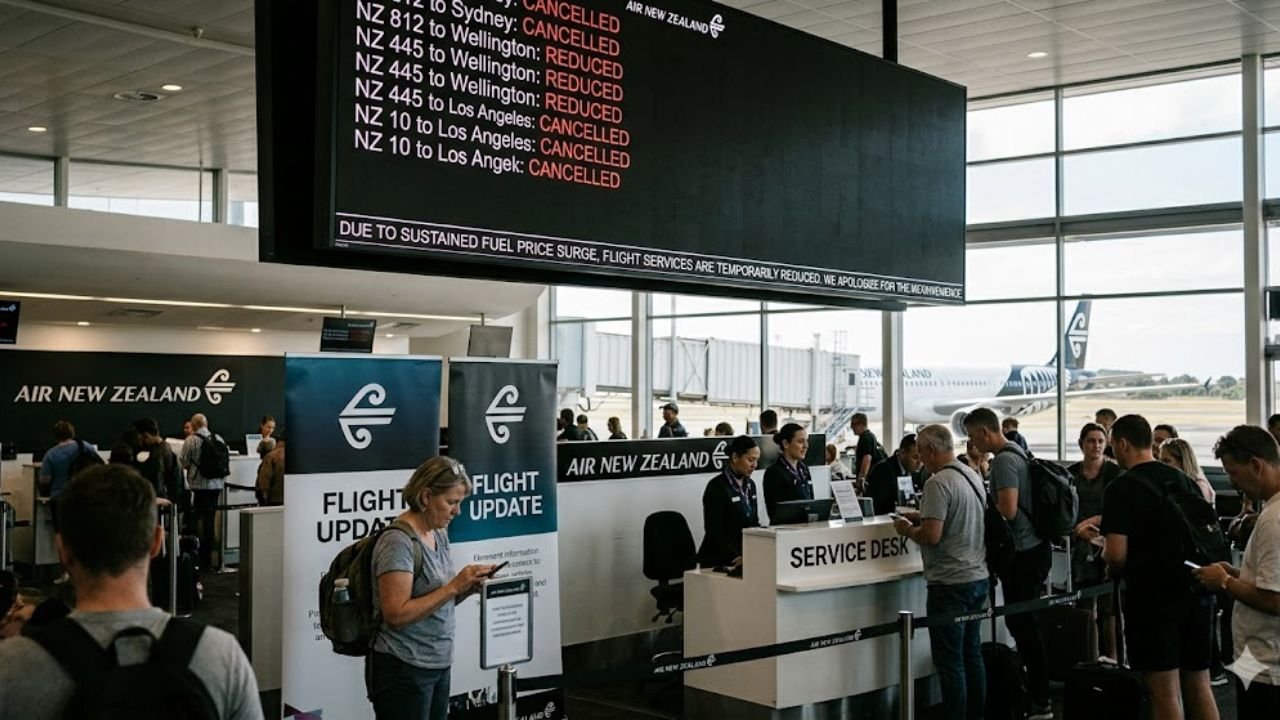
Air New Zealand cutting services in early 2026 is due to a spike in the price of global jet fuel and not due to a drop in demand for travel. The move demonstrates the rapid changes brought about by geopolitical and energy market shocks on the airline industry and how they impact schedule changes, ticket prices, and passenger experiences.
Why Fuel Prices Are Suddenly So High
Fuel is one of the largest expenses for airlines, and jet fuel, in particular, is a big cost for Air New Zealand. The cost of jet fuel is now two times more than the cost the airline is used to paying.
This is particularly due to the ongoing war in the Middle East. The war has also seen Iranian ships attacked, which has caused a disruption in the Strait of Hormuz, a critical area in the flow of global oil supply. Fuel costs, especially jet fuel, have risen as a result.
Air New Zealand now has to pay more than 100 US dollars per barrel of oil. As crude oil prices rise, jet fuel prices increase as well.
For airline companies that fly to and from island nations, adjusting to fuel price changes is quite difficult. Fuel hedging can lessen price changes temporarily, but sustained high fuel prices force airlines to consider modifying fares, introducing surcharges, or reducing the number of flights.
Air New Zealand has already raised ticket prices, but management understands that prices cannot increase too much or demand will fall.
How Many Flights and Passengers Are Affected
To help control costs, Air New Zealand will reduce some flights over the next few weeks, making around 5 percent of flights unavailable. In total, approximately 1,110 flights will be cancelled through May 2026.
This will affect about 44,000 passengers. However, the airline plans to rebook most travelers onto same-day flights whenever possible.
Air New Zealand will not remove routes entirely but will operate flights less frequently, particularly during off-peak times. This strategy aims to minimize disruption for travelers.
Passengers may face fewer time-slot options rather than losing entire destinations. The airline expects to operate about 22,000 flights during the same period, meaning the cancellations represent a targeted cost-control strategy rather than a broad reduction in service.
However, for travelers with fixed schedules, reduced flexibility and fuller remaining flights may create additional stress.
Snapshot: Air New Zealand’s 2026 Fuel Impact
| Metric | Approximate Figure / Change |
|---|---|
| Share of flights cancelled | About 5 percent of scheduled flights |
| Number of flights cut | Approximately 1,100 services |
| Passengers needing rebooking | About 44,000 passengers |
| Typical jet fuel price | Around 85 US dollars per barrel |
| Current jet fuel price | Approximately double the standard |
| Domestic fare increase | About 10 NZ dollars |
This snapshot shows how the sudden doubling of fuel prices has led to flight reductions, fare increases, and widespread passenger rebookings within just a few weeks.
Impacts on Passengers and Fares
The most immediate changes facing customers are schedule adjustments, ticket price increases, and fewer promotional discounts.
Air New Zealand has already raised domestic ticket prices by about 10 New Zealand dollars, increased international short-haul fares by roughly 20 dollars, and raised long-haul ticket prices by around 90 dollars.
The airline is also emailing passengers to notify them of schedule changes and offering rebooking options, often on the same day.
Globally, rising jet fuel costs are pushing airlines to increase ticket prices or introduce fuel surcharges. Airlines such as Cathay Pacific have already adjusted ticket prices and added surcharges on some routes.
Industry analysts expect these controlled price increases to continue, particularly on high-demand routes and during peak travel periods.
How Air New Zealand Is Managing the Crisis
Air New Zealand leadership says the capacity reductions are designed to maintain affordability while protecting essential connectivity across the country.
The airline is prioritizing important regional routes and key international tourist connections while reducing flights during less busy periods.
Because of the uncertain fuel situation, the airline has paused its earnings forecast for the year, highlighting how unpredictable the financial impact of the fuel shock could be.
In the short term, the airline may adjust schedules again if fuel prices fall. In the longer term, the situation could lead to structural changes, including fleet adjustments and deeper schedule planning.
Higher operating costs will likely require clearer communication with passengers as the airline navigates this volatile period.
Lessons for Travelers and the Aviation Industry
The Air New Zealand situation highlights the ongoing risks facing the aviation industry due to geopolitical tensions and volatile energy markets.
While airlines have become more efficient in recent years, rapid fuel price increases still create significant challenges when balancing profitability, fare affordability, and global connectivity.
Travelers are advised to stay alert for airline updates, monitor booking changes, and allow extra flexibility in travel plans.
The crisis also reinforces the need for the aviation industry to invest in fuel-efficient aircraft and alternative energy technologies that reduce dependence on volatile fossil fuel markets.
For now, Air New Zealand must continue operating carefully while navigating global fuel price uncertainty and geopolitical pressures.
FAQs
Q1 Why is Air New Zealand cancelling flights?
Air New Zealand is cancelling about 5 percent of its scheduled flights because of rapidly rising jet fuel prices linked to geopolitical tensions in the Middle East.
Q2 What happens to affected passengers?
Affected passengers are being rebooked onto alternative flights. Many travelers will still be able to fly on the same day as their original booking.
Q3 Will plane ticket prices keep increasing?
If jet fuel prices remain high, airlines may continue raising ticket prices or adding fuel surcharges, meaning passengers should expect higher airfare costs.