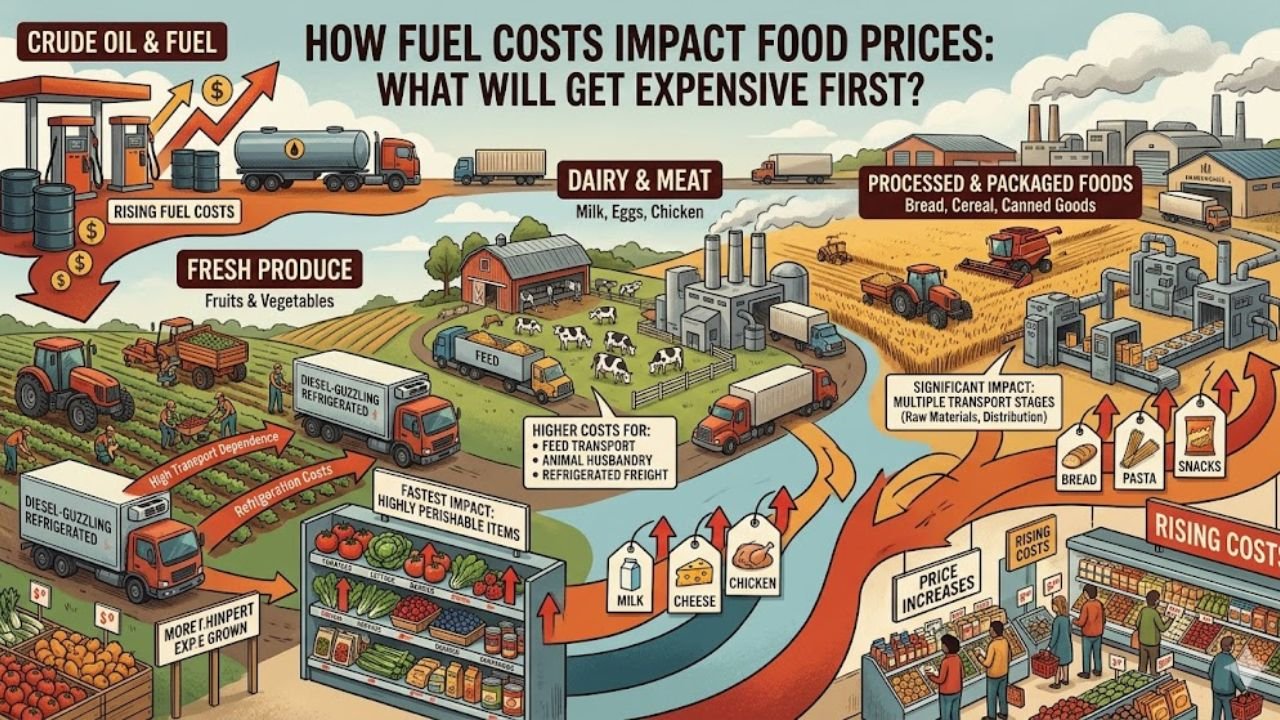
In 2026, the global economy continues to struggle with a worsening energy cost problem, and its impact is being felt directly at the dinner table. Fuel prices, influenced by geopolitical tensions in the Middle East and domestic energy policy shifts, are driving up the cost of everyday food items. Consumers are realizing that fuel surcharges are no longer limited to airlines—they are embedded in nearly every loaf of bread and gallon of milk.
This phenomenon goes beyond gas station prices. Rising crude oil and natural gas costs affect agriculture in three major ways: increased prices for synthetic fertilizers, higher fuel expenses for farm machinery, and more expensive logistics for long-distance refrigerated transport. Due to the “just-in-time” delivery system, even a small increase in diesel prices can quickly translate into higher grocery store prices within days.
Why Perishable Foods Lead Inflation
Perishable goods like fresh produce and dairy are often the first to reflect price increases. Unlike canned or shelf-stable items, fruits and vegetables such as tomatoes, leafy greens, and berries must be transported quickly using refrigerated trucks, or “reefers,” which consume significantly more fuel.
Between winter 2025 and spring 2026, fresh produce prices rose by nearly 12%. The high water content of produce increases shipping weight, making transportation even more expensive. When distributors face rising fuel costs, they pass these expenses to retailers, who then adjust prices accordingly—sometimes instantly through electronic shelf labels.
The Hidden Link: Fertilizers and Grains
While produce prices react quickly, staple grains like wheat, corn, and rice experience delayed but lasting increases. This is largely due to the reliance on natural gas in fertilizer production through the Haber-Bosch process. As energy prices rise, so does the cost of fertilizing crops.
This creates a lag effect. Higher fertilizer costs today may result in increased prices for flour and cereals six to nine months later. Farmers may also reduce fertilizer usage to cut costs, leading to lower yields and widening the global food supply gap.
Fuel Price Sensitivity of Food Categories
Food Type
Response Time
Price Impact
Primary Driver
Estimated Increase
Fresh Vegetables
1–2 weeks
Instant
Refrigerated transport
3–5%
Poultry & Eggs
3–4 weeks
Rapid
Transport and heating
2–3%
Bread & Cereals
4–6 months
Delayed
Fertilizers and processing
1–2%
Canned Goods
6+ months
Slow
Warehousing energy
<1%
Beef
2–3 months
Gradual
Feed logistics
4–6%
Last-Mile Costs and Retail Reality
The final stage of delivery—from distribution centers to grocery stores—is where consumers feel the impact most. Smaller retailers are especially vulnerable due to limited ability to hedge fuel costs. Meanwhile, grocery delivery services add another layer of fuel dependency, increasing overall food expenses through service fees and fuel surcharges.
Strategic Shopping in 2026
Consumers are adapting by shifting toward “low-mileage” eating—choosing locally sourced and seasonal foods that require less transportation. Plant-based proteins are also gaining popularity due to their lower energy footprint compared to beef.
Although innovations like electric freight and sustainable fuels are emerging, their widespread adoption will take time. For now, monitoring energy trends remains essential. When crude oil prices rise, food prices—especially fresh produce—are likely to follow quickly.
FAQs
Q1 What foods are least affected by fuel price increases?
Pasta, beans, and lentils are among the least affected due to their lightweight nature, long shelf life, and ease of storage. Retailers can stock up on these items when transportation costs are lower.
Q2 Why does beef become more expensive than chicken?
Beef production involves a longer lifecycle and more resource inputs. The fuel required to grow, transport, and process cattle over several years makes it more sensitive to rising energy costs than poultry.
Q3 Are local farmers’ markets cheaper during fuel crises?
Often, yes. Local farmers benefit from reduced transportation and storage costs. However, they are still affected by diesel prices for machinery and fertilizer expenses.