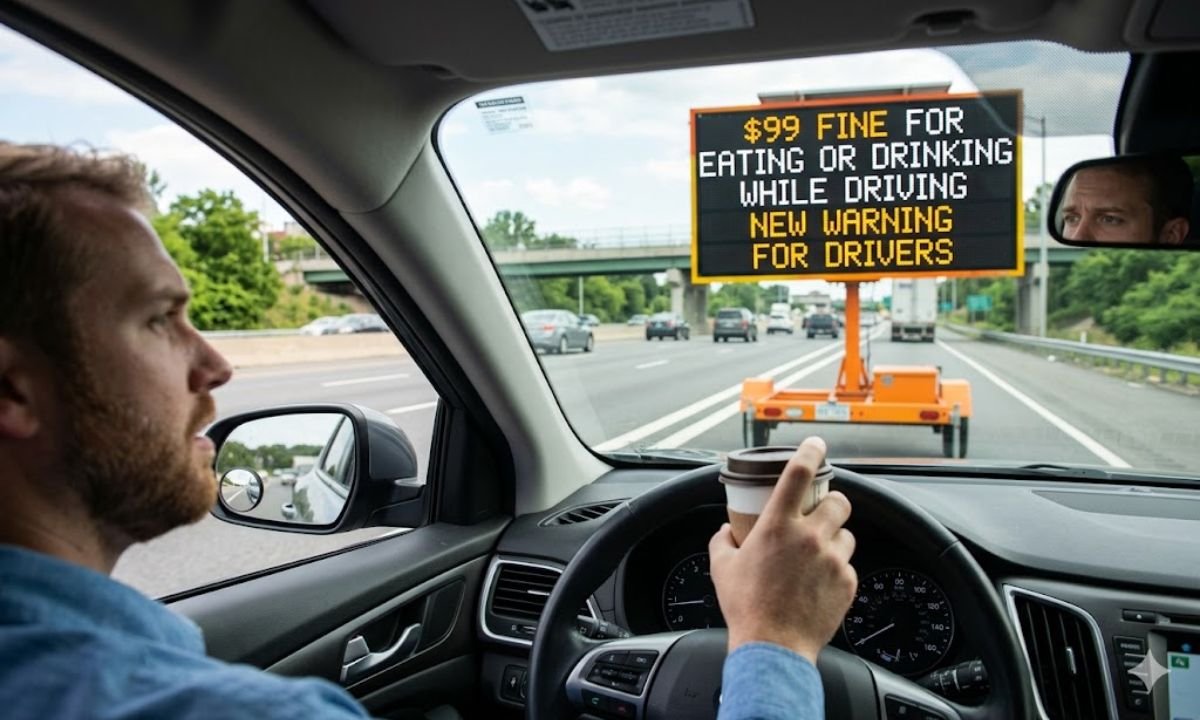
There are new stories about people being fined $99 for eating or drinking while driving. The information can be found on platforms like Facebook or different news services. However, the situation is a little more complicated than that. In general, there are no specific laws in which eating or drinking in your car is illegal. However, if a police officer sees your food or drink causes distracted driving, you can get a ticket for that. More simply, it is not illegal to have a burger in your hand, but it is illegal to be irresponsible and lose control of your vehicle or not pay attention to the road.
What the Law Actually Targets: Distraction, Not Just Snacks
All road safety laws primarily focus on whether the driver maintains full control of the vehicle and stays attentive to the road. For example, the laws of the UK allow drivers to eat or drink while driving. However, if an officer believes that the driver is distracted and not properly controlling the vehicle, they may issue an on-the-spot fine along with penalty points on the license.
Many other countries follow a similar approach. Instead of banning specific actions like eating a sandwich or drinking coffee, the law focuses on careless or distracted driving. In these situations, a coffee, sandwich, or even reaching for a dropped snack could be used as evidence that the driver was not paying proper attention to the road.
The commonly mentioned “$99 fine” is often an oversimplified explanation of a basic fixed-penalty fine used in some jurisdictions. The actual fine amount can vary depending on the country, state, type of vehicle, and whether the driver has committed previous offences. Some penalties may also include demerit points, license suspension, or mandatory driving courses.
Why You Shouldn’t Eat and Drink While Driving
Eating or drinking while driving increases the chances of distraction and accidents. When one hand is occupied with food or a drink, the driver may not react quickly if a child suddenly crosses the road or if the vehicle ahead stops abruptly.
Drivers may also look away from the road if food spills or falls. Even a few seconds of distraction can lead to serious consequences, especially at high speeds. Managing drinks or food containers inside the vehicle can also divert attention from the road.
Hot drinks can be particularly dangerous. If a driver spills a hot beverage, they may instinctively react by grabbing the wheel suddenly or braking unexpectedly, which can create dangerous situations for other drivers.
Traffic officers report that these types of distractions happen frequently. In many cases, drivers who are distracted by food or drinks receive careless driving tickets, and explaining that they were only taking a sip of water rarely changes the outcome.
Common Offences for Distracted or Reckless Driving
In most places, eating or drinking while driving is categorized under distracted driving or careless driving offences. Instead of having a specific rule for food or drinks, authorities enforce broader laws that apply to any activity that distracts the driver.
Some jurisdictions may issue a small fine for a first offence, sometimes around the widely reported $99 amount. However, penalties can increase significantly if the behaviour leads to a near miss, accident, or repeated violations.
| Situation | Typical Outcome | Notes |
|---|---|---|
| Minor distraction, no accident | On-the-spot fine and possible demerit points | Often classified as careless driving |
| Clear distraction causing a near miss | Higher fine or possible court appearance | Considered more serious careless driving |
| Distraction leading to a collision | Court case, heavy fines, possible license suspension | May affect insurance and legal record |
Different regions enforce different rules, so drivers should always check their local highway code or traffic authority guidelines, especially if they frequently travel between regions or countries.
How To Stay Safe and Avoid Getting Fined
The best way to avoid distracted driving fines is to treat the car strictly as a driving space. Planning your journey to include breaks for food and drinks can help you stay alert and avoid unnecessary distractions.
For long trips, taking short breaks can improve concentration and make driving safer. These stops also reduce the temptation to eat or drink while the vehicle is moving.
If you need to take a sip of water while driving, use practical precautions. Spill-proof containers, avoiding hot drinks, and only drinking when the road ahead is clear can help reduce risk.
Keeping the dashboard and seats organized can also prevent distractions caused by searching for items while driving. During heavy traffic or complex driving conditions, it is safest to avoid eating or drinking entirely.
The Bottom Line: Focus First, Myths Second
The viral claim that drivers automatically receive a $99 fine for eating or drinking while driving is misleading. Most traffic laws do not specifically ban snacks or beverages. Instead, they allow officers to penalize any activity that distracts the driver or reduces vehicle control.
The real danger is not simply the fine but the risk of accidents, injuries, and legal consequences. Distracted driving laws are becoming stricter in many places as authorities work to reduce road accidents.
Staying focused on the road protects you, your passengers, and other drivers. The safest option is to pull over and take a short break if you need to eat or drink. A few extra minutes can help prevent accidents and keep you within the law.
FAQs
Q1 Is driving and eating illegal?
No, eating while driving is not illegal in most places. However, it can become illegal if it causes distracted or careless driving.
Q2 Can I get a ticket for drinking while driving?
Yes. Even drinking water while driving could result in a ticket if a police officer believes it distracted you or caused unsafe driving behaviour.
Q3 How can I avoid distracted driving fines related to food and drink?
Plan meal breaks during long trips, avoid eating in heavy traffic, and always keep your focus on the road.