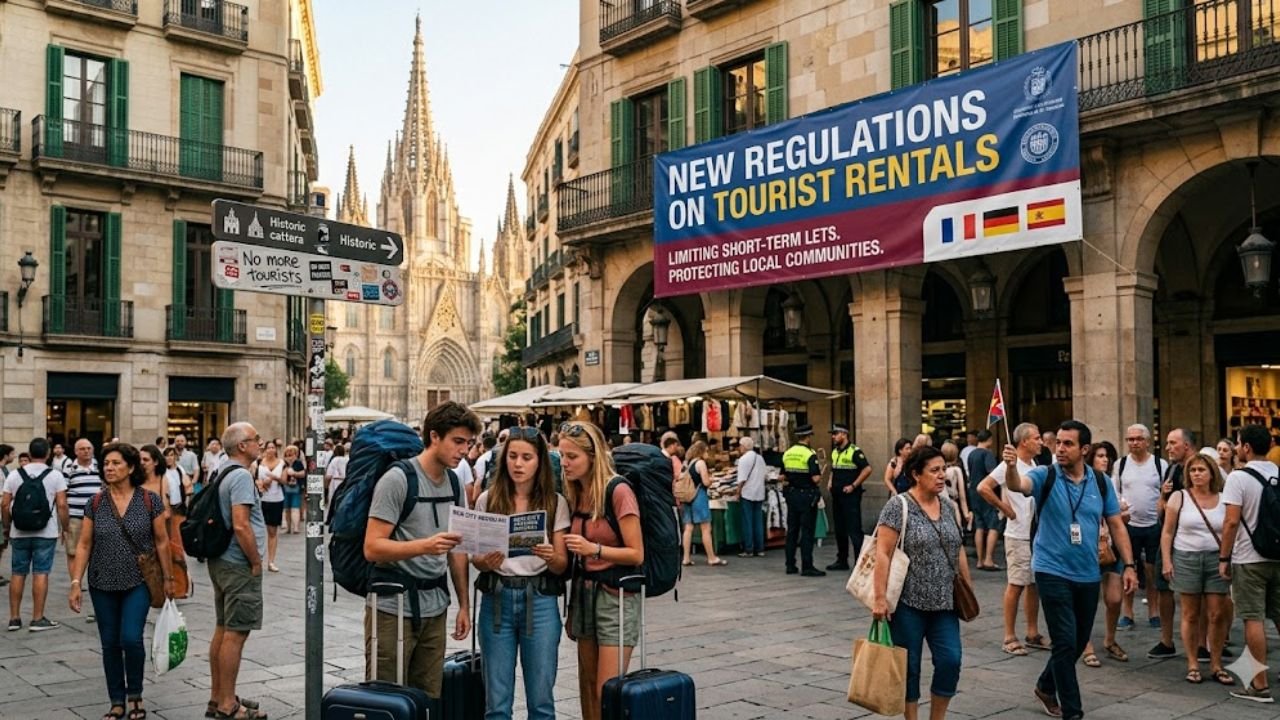
Six years into the 2020s, Europe is finally experiencing the full impact of the pandemic on its travel ecosystem. The year 2026 is shaping up to deliver the most significant structural transformation in decades. What was once celebrated as a digital revolution in travel—short-term rental properties (STRs)—is now facing intense scrutiny due to its negative effects on local housing markets and communities.
Major cities like Barcelona, Paris, and Berlin are leading coordinated enforcement actions against STRs. These measures go beyond local concerns and reflect a broader European strategy aimed at reclaiming residential neighborhoods while balancing tourism growth with economic sustainability.
The 2026 European Tourism Mobility Regulation (ETMR)
The introduction of the 2026 European Tourism Mobility Regulation (ETMR) establishes a unified legal framework for STR data collection and reporting across Europe. This regulation empowers local authorities with real-time insights, enabling responsive policies to prevent housing crises and regulate tourism flows more effectively.
France: Tourism Levies and the 90-Day Rule
France has taken a leading role with the implementation of the Le Meur Law in 2026. This landmark legislation grants local mayors authority to impose tourism levies and enforce a strict 90-day annual rental cap for primary residences.
In cities such as Paris, Lyon, and Bordeaux, the annual rental limit has already been reduced from 120 nights to 90 nights. Additionally, tax benefits for unclassified furnished rentals have been reduced, now capped at 30% with an income ceiling of €15,000.
All listings must display a national registration number, and non-compliance can lead to fines of up to €20,000, shared between the property owner and the hosting platform. These measures aim to curb the “shadow hotel” phenomenon and promote long-term housing availability.
Spain: Crackdown on Unlicensed Listings
Spain has adopted one of the most aggressive approaches in Europe, directly linking STR growth to the housing crisis. In February 2026, the Housing Ministry instructed booking platforms to remove more than 80,000 illegal listings that failed to comply with the new single tourist-property register.
This follows a record €64 million fine imposed on major booking platforms in late 2025. Barcelona is going even further, planning a complete ban on short-term tourist apartments by 2028.
Country
Primary Residence Requirement
Enforcement Mechanism
Maximum Penalty
France
90–120 nights
National Registration Portal
€15,000
Spain
Varies by region
Tourist-Property Register
€600,000 (Platforms)
Germany (Berlin)
90 nights
Zweckentfremdungsverbot Law
€500,000
Germany: Protecting Residential Space
Germany, particularly Berlin and Munich, has implemented a stricter “residential space misuse” framework. The Zweckentfremdungsverbot law prohibits the commercial use of residential properties without proper authorization.
Authorities are increasing enforcement through data-sharing agreements, aiming to return over 8,000 housing units to the long-term rental market by 2026. Short-term rentals are limited to 90 days annually and typically require the owner to reside in the property.
This resident-first approach is designed to preserve community structures and prevent neighborhoods from being hollowed out by excessive tourism-driven rentals.
The Digital One-Stop Shop: A Game Changer
A major innovation is the EU’s “Single Digital Entry Point,” which will streamline regulatory oversight across member states. This system enables local governments to perform random compliance checks and access real-time occupancy data from platforms like Airbnb and Booking.com.
By closing the longstanding “data gap,” authorities can better enforce regulations and identify illegal rentals. Additionally, “restricted zones” will be established in high-density tourist areas to manage congestion and protect cultural heritage.
Looking Ahead: A More Regulated Tourism Industry
As 2026 progresses, Europe’s focus is shifting from rapid tourism growth to sustainable regulation. While these changes may initially reduce availability and increase travel costs, they aim to create a balanced ecosystem that supports both residents and visitors.
The long-term vision is a more transparent, fair, and sustainable tourism market that preserves the cultural charm of Europe while preventing the negative impacts of overtourism.
FAQs
Q1 Is it still legal to rent out a spare room in Europe?
Yes, most regulations distinguish between home-sharing and full-property rentals. Renting a room while living in the property is generally allowed, provided you register with local authorities and stay within annual limits (typically 90–120 nights).
Q2 How can travelers verify if a rental is legal?
From 2026 onward, all legal STR listings must display a valid registration number. Listings without this number may be illegal and could be removed or canceled.
Q3 Will these rules increase travel costs?
In the short term, stricter regulations may reduce supply and increase prices in high-demand areas. However, the long-term goal is to stabilize the market and encourage investment in regulated accommodations such as hotels and aparthotels.