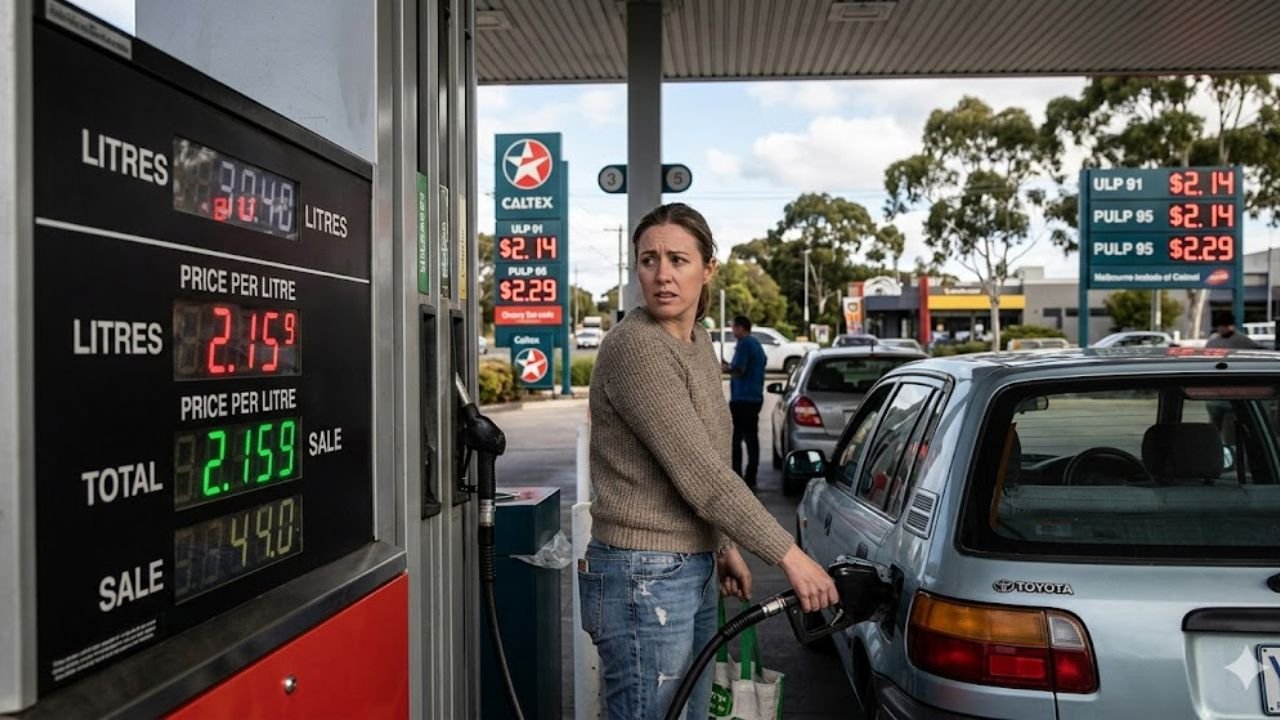
In 2026, international Arctic conflicts and domestic inflation pressures have pushed Australia into a challenging economic phase. With borders closed and global instability rising, households are feeling the squeeze as the cost of living continues to climb. Many Australians are now forced to make difficult choices between essential expenses and maintaining financial stability.
The Reserve Bank of Australia (RBA) recently raised interest rates by 25 basis points, bringing the cash rate to 4.10% in an effort to curb persistent inflation. Governor Michele Bullock acknowledged uncertainty around how long this period of elevated rates will continue, calling it a critical phase for the economy.
Fuel Prices Surge Across the Country
Fuel prices have sharply increased, with unleaded petrol averaging over $2.20 per litre in major cities and exceeding $2.30 in regional areas. For many households, this translates into an additional $25 to $35 per tank compared to January levels.
Expenditure Item
January 2026 Average
March 2026 Average
Estimated Monthly Increase
Petrol (Unleaded 91)
$1.71 / litre
$2.21 / litre
$70.00 (140L/month)
Mortgage Repayment
$3,840 (3.85%)
$4,022 (4.10%)
$182.00
Electricity Costs
Base Rate
+32%
$45.00
Grocery Basket
$250/week
$258/week
$32.00
Housing and Rental Pressures Intensify
Higher interest rates are also placing strain on renters. Landlords facing increased mortgage repayments are passing costs onto tenants, particularly in cities like Brisbane and Perth where rental vacancies remain below 5%. While property prices have shown slight moderation, demand at the lower end of the market remains extremely competitive.
First-home buyers are rushing to enter the market before further price increases, creating additional pressure across the housing sector.
Changing Consumer Behaviour
Australians are adopting a “belt-tightening” approach to spending. Households are prioritizing essential expenses such as housing and fuel, while cutting back on discretionary spending. Businesses, particularly in the hospitality sector, are already experiencing slower weekends and reduced customer traffic.
Supply Chain Impact and Everyday Inflation
Rising fuel costs and higher borrowing expenses are driving “input inflation,” increasing the cost of transporting goods and running businesses. As a result, everyday items like groceries are becoming more expensive, reflecting what many refer to as “kitchen table inflation.”
Annual inflation remains at 3.8%, still above the RBA’s target range of 2% to 3%. The expiration of energy rebates has further contributed to electricity price increases of over 30% in some regions.
Economic Outlook: A Focus on Resilience
Economists remain divided on whether the RBA will pause rate hikes or continue tightening in the coming months. Much will depend on global oil prices and upcoming inflation data. With the labor market operating near full capacity, wage growth and inflation pressures remain elevated.
For many Australians, 2026 is shaping up to be a year focused less on growth and more on financial resilience and liquidity management.
FAQs
Q1 Why did the RBA increase rates in March 2026?
The RBA raised rates to 4.10% to combat ongoing inflation, driven by strong employment, rising service costs, and global energy price pressures.
Q2 How much will the rate increase cost homeowners?
For a $600,000 mortgage over 25 years, a 0.25% increase adds approximately $91 to $95 per month. Combined with previous increases, homeowners may be paying around $190 more monthly since the start of the year.
Q3 Will fuel prices decrease soon?
Fuel prices are expected to remain volatile due to geopolitical tensions and global supply chain disruptions. While temporary dips may occur, prices are likely to stay above long-term averages.