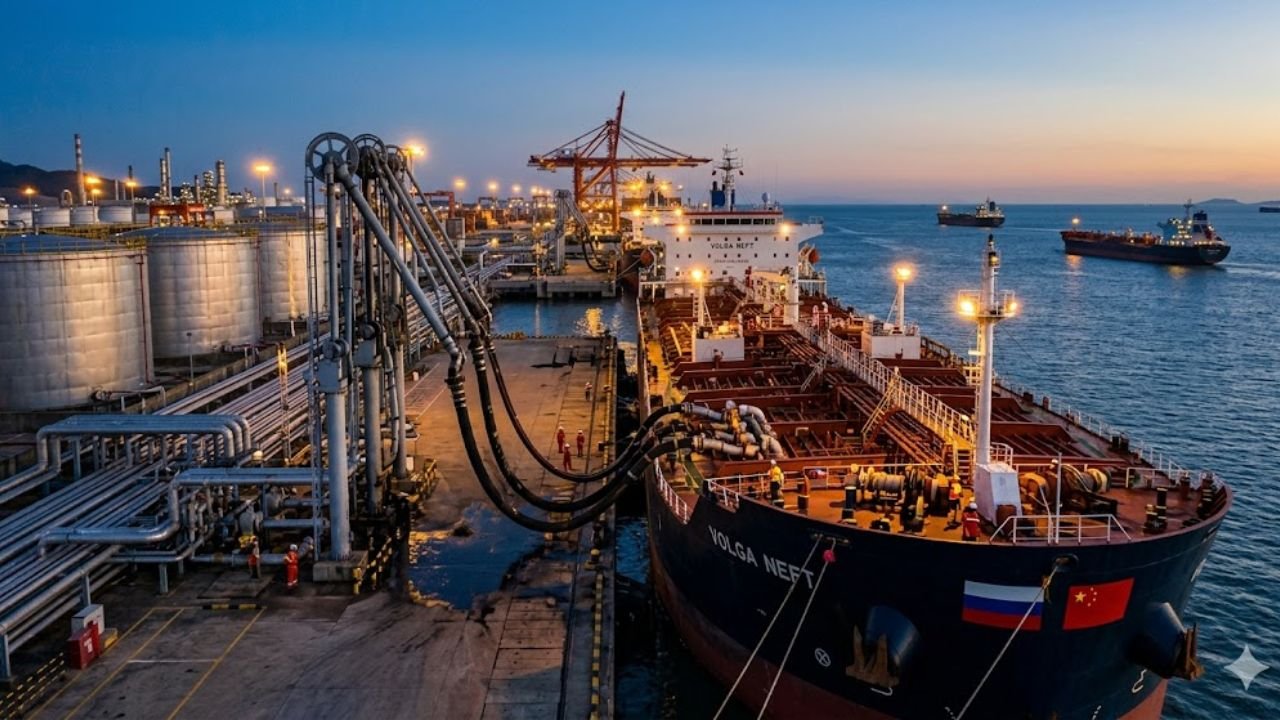
By 2026, global fuel oil trade routes are undergoing significant transformation. For the first time on record, Russian fuel oil exports to Asia surged to historic highs in March, driven by a combination of Middle East supply disruptions and a strategic pivot toward eastern markets. While Western sanctions aimed to restrict Russia’s participation in global trade, the closure of the Strait of Hormuz amid regional conflict created a supply vacuum, positioning Russia as a crucial “swing supplier” for energy-hungry Asian economies.
This shift is not temporary—it signals a long-term restructuring of global fuel sourcing and distribution. In the first half of 2026, markets are reacting mechanically to geopolitical disruptions, particularly the instability near the Strait of Hormuz, which has impacted nearly 20% of global oil trade flows.
Impact of Middle East Conflict on Oil Markets
The conflict has forced multiple Middle Eastern suppliers to declare force majeure on shipments, significantly tightening supply. As a result, spot prices for high sulphur fuel oil (HSFO) have surged sharply, putting immense pressure on importing nations like India, China, and Singapore.
To mitigate a full-scale energy crisis, the U.S. Treasury introduced limited 30-day exemptions in mid-March, allowing certain Russian petroleum products to be transported. This temporary policy adjustment aims to stabilize energy supplies, particularly in Southeast Asia, where fuel oil plays a vital role in power generation and maritime operations.
Changing Trade Patterns and Record Imports
Ship-tracking data indicates a dramatic shift in trade patterns. In March 2026, Asia is projected to import over 3 million metric tons of Russian fuel oil—equivalent to approximately 615,000 barrels per day—marking the highest volume ever recorded for this category.
Southeast Asia, particularly Singapore and Malaysia, has emerged as the primary destination, accounting for a significant share of these imports. While much of this fuel is used for maritime bunkering, a growing portion is being redirected to independent “teapot” refineries in China’s Shandong Province.
These refiners are increasingly turning to Russian feedstock as a cost-effective alternative to Middle Eastern heavy crude, which has become more difficult to procure due to geopolitical constraints.
Russian Fuel Oil Exports to Asia (March 2026)
Destination Region
Estimated Volume (Million Tons)
Main Use Case
Southeast Asia (Singapore/Malaysia)
1.8
Maritime Bunker Fuel
China (Shandong Province)
1.4
Refinery Feedstock
India
0.4
Power & Industrial Use
Others (Philippines/Thailand)
0.2
Strategic Reserves
Economic Implications for Asian Markets
The influx of Russian fuel has provided much-needed relief to overheated Asian energy markets. Prior to this shift, spot premiums for 380-centistoke HSFO had reached record highs, threatening global shipping costs and supply chains.
Russian supply has helped stabilize prices, although markets remain in backwardation—where current prices exceed future expectations—indicating ongoing supply concerns.
Countries like the Philippines and Thailand have implemented unconventional measures, including four-day workweeks, to manage fuel shortages. Both nations are now increasingly reliant on Russian imports to sustain industrial activity through the second quarter of 2026.
Energy Security and Market Realignment
The evolving energy crisis highlights a deeper tension between geopolitical sanctions and global energy security. While Western nations continue to exert pressure on Russia, Asian markets have become central to maintaining supply stability.
The emergence of a “grey market” for oil—characterized by limited Western insurance and alternative financial systems—has become a critical component of global supply chains. This parallel market is expected to remain influential well beyond 2026.
Strategic Changes in the Maritime Sector
The maritime industry has been one of the primary beneficiaries of these shifts. Tankers from Russia’s Baltic and Black Sea ports are increasingly supplying Singapore, the world’s largest bunkering hub, helping to replenish inventories despite longer routes and logistical challenges.
Industry analysts suggest that these new trade patterns may become “sticky.” Refiners and shipping companies adapting to Russian fuel grades are unlikely to revert to previous supply chains, even if Middle Eastern output recovers.
As a result, early 2026 may represent the beginning of a new normal in global energy markets, with reconfigured supply chains and persistent geopolitical influence shaping long-term trends.
FAQs
Q1 What caused the surge in Russian fuel oil exports to Asia in March 2026?
The surge was driven by supply disruptions from the Middle East, particularly the closure of the Strait of Hormuz, combined with temporary policy adjustments allowing Russian exports to flow into Asian markets.
Q2 Which countries are the main buyers of Russian fuel oil?
China leads in purchases for refinery feedstock, while Singapore and Malaysia dominate maritime fuel usage. India has also increased imports to meet industrial and energy demands.
Q3 Will these high export levels continue throughout 2026?
Future export levels depend largely on the duration of Middle East disruptions. While Russian supply provides short-term relief, the market is expected to remain tight due to ongoing geopolitical uncertainties.