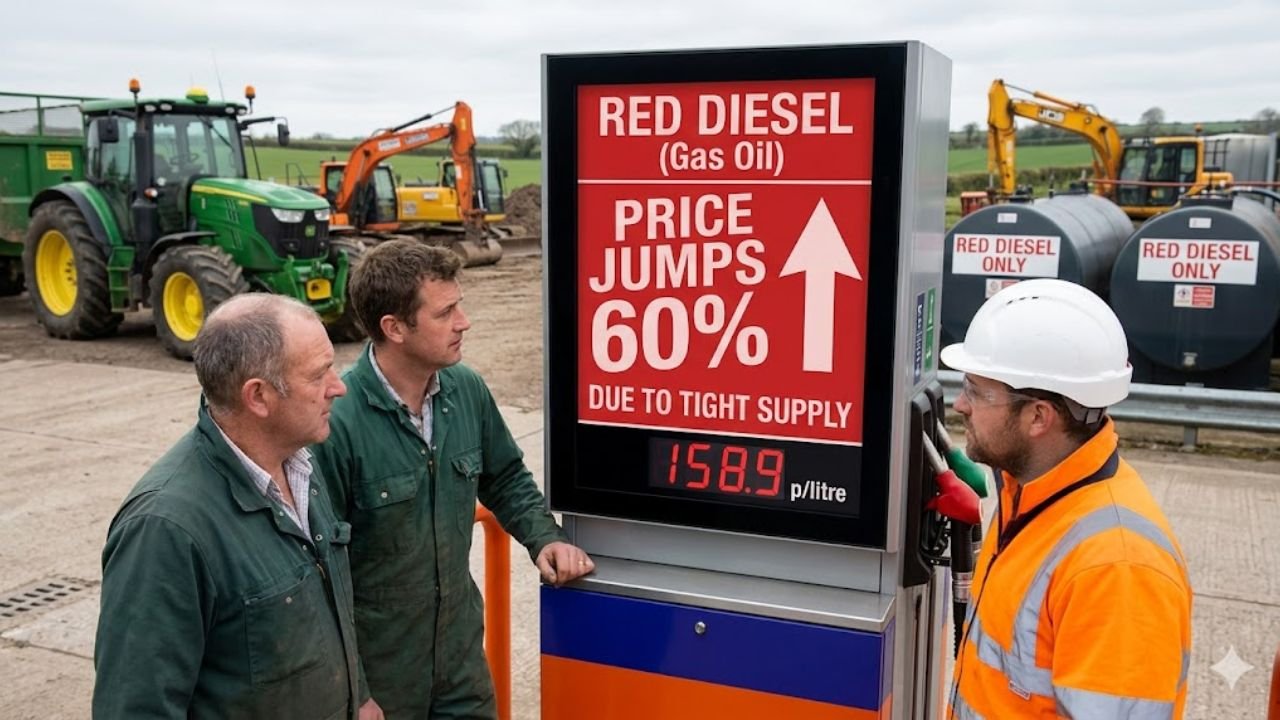
Since the beginning of 2026, the global energy sector has undergone a dramatic shift, particularly in the pricing of red diesel. Market data reveals that red diesel fuel prices have surged by approximately 60%, marking a significant increase compared to the relatively stable benchmarks observed throughout 2025. This sharp rise has been driven by what analysts describe as a “perfect storm” of global conditions.
Geopolitical tensions in the Middle East have disrupted oil supply chains, while refinery closures across North America and Europe have constrained processing capacity. For industries such as construction, shipping, and agriculture—where red diesel is a primary fuel—this price escalation has created substantial operational challenges. Unlike road diesel, which is often influenced by government controls, red diesel pricing is heavily dependent on market dynamics and the availability of middle distillates.
Global Supply Issues Driving Price Increases
The core driver behind rising red diesel prices is the tightening supply of middle distillates. Increased global demand, combined with the retirement of older refineries transitioning toward renewable energy production, has left the market with minimal spare capacity. As a result, the system is highly vulnerable to sudden disruptions.
In March 2026, escalating tensions in a key global shipping route led to a near halt in tanker traffic. This disruption left millions of barrels of refined fuel stranded in transit between major markets in Europe and Asia. The immediate consequence was a bidding war for available inventories, further accelerating price increases.
Because red diesel is chemically identical to road diesel—aside from the addition of a red dye for taxation purposes—it competes directly with transport fuel for limited refining output. This overlap intensifies demand pressure, further tightening supply conditions.
Regional Price Differences and Market Trends
The impact of supply constraints varies across regions, but the upward pricing trend is consistent worldwide. In the UK and parts of the European Union, the shift away from Russian petroleum products has forced reliance on imports from distant suppliers such as India and the United States. These longer supply chains introduce higher freight and insurance costs, which are ultimately passed on to end users.
While crude oil prices have risen moderately—fluctuating between $95 and $105 per barrel—the refining margin, commonly known as the “crack spread,” has reached record highs. This indicates that the primary issue is not crude oil scarcity, but rather insufficient refining capacity to convert crude into usable fuels like diesel.
Fuel Price Comparison: March 2025 vs March 2026
Fuel Metric
March Average 2025
March Average 2026
% Change
Red Diesel (Pence per Litre)
68.40
109.44
+60%
Brent Crude Oil (USD per Barrel)
$75.00
$98.50
+31%
Middle Distillates
$12.00
$34.00
+183%
Average Delivery Lead Time
3 Days
10 Days
+233%
Operational Impact on Agriculture and Construction
The timing of this price surge is particularly challenging for the agricultural sector. As farmers enter the spring sowing season, the cost of fueling machinery has nearly doubled in some areas. This increase directly impacts food production costs, which are eventually reflected in higher retail prices.
The construction industry is similarly affected. With typically low profit margins and long-term contracts, many contractors are unable to absorb sudden fuel cost increases. Businesses that did not secure fuel through forward purchasing agreements in 2025 are now facing significant financial strain.
Beyond pricing, physical fuel availability has become a growing concern. In certain remote regions, distributors have implemented rationing systems to ensure minimal supply for all customers. Purchase limits are increasingly common, highlighting the severity of the supply crunch.
Market Outlook for the Rest of 2026
Looking ahead, analysts maintain a cautious outlook for the remainder of 2026. Although new large-scale refineries in Asia and the Middle East are expected to come online later in the year, immediate relief is unlikely. In the short term, market sentiment remains bullish, with prices expected to stay elevated.
In response to ongoing volatility, many businesses are exploring alternative fuel options. Hydrotreated Vegetable Oil (HVO) has emerged as a leading substitute for red diesel. As a renewable, drop-in fuel requiring no engine modifications, HVO has become increasingly attractive—especially as traditional diesel prices rise.
Additionally, companies are investing in expanded on-site fuel storage to take advantage of temporary price dips through bulk purchasing strategies. These adaptive approaches are becoming essential for managing operational costs in an unpredictable energy market.
Adapting to a Changing Energy Landscape
As global supply chain disruptions and geopolitical tensions continue to evolve, businesses must adapt their energy strategies accordingly. Effective fuel management, diversification of energy sources, and strategic planning will be critical for maintaining operational continuity in this high-cost environment.
FAQs
Q1 Why have red diesel prices increased more than road diesel?
Although both fuels are affected by global supply challenges, road diesel prices are often moderated by government policies, taxes, and pricing controls. Red diesel, on the other hand, is more directly exposed to spot market fluctuations and supply shocks, making it more volatile.
Q2 Are there alternatives to red diesel for heavy equipment?
Yes, Hydrotreated Vegetable Oil (HVO) is the most widely used alternative. It is a renewable diesel that can be used as a direct replacement without requiring engine modifications. With the recent rise in red diesel prices, HVO has become a more cost-effective and sustainable option for many businesses.
Q3 When will red diesel prices start to fall?
Market forecasts suggest that prices may begin to stabilize once new refining capacity becomes fully operational between 2025 and 2026. However, ongoing geopolitical disruptions could delay any significant price reductions, keeping fuel costs elevated for an extended period.