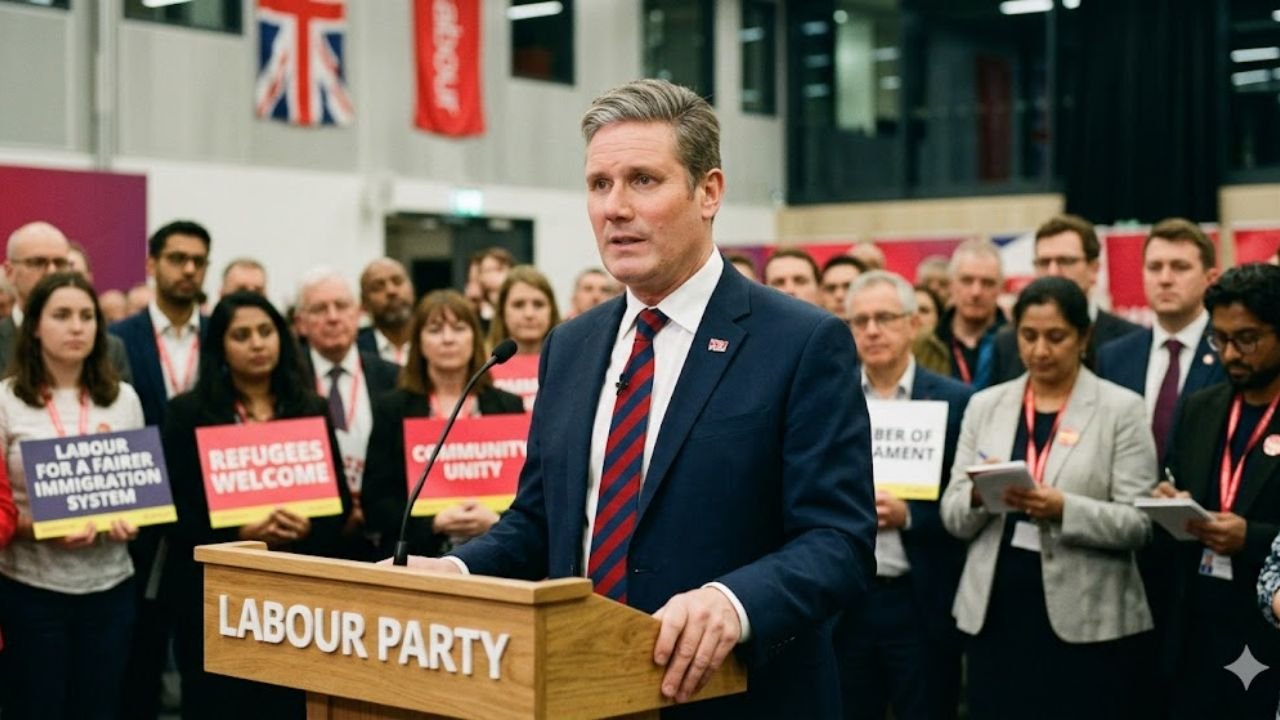
In early 2026, Prime Minister Keir Starmer is conducting initial assessments of sweeping reforms to the UK immigration system. While the government aims to “restore control” over the border, the latest legislative proposals have triggered the most significant backlash from within the Labour Party itself. Despite broad agreement among Labour MPs on the need to reduce net migration, more than 100 members have signed a letter warning that the proposed changes could contribute to humanitarian crises, including risks to vulnerable migrants.
Starmer is navigating a complex political balancing act. On one hand, he faces mounting pressure from businesses and the public to bring down net migration. On the other, he must address growing concerns from within his own party about the moral and humanitarian consequences of stricter border controls. With internal dissent representing roughly a quarter of Labour MPs, compromise appears increasingly necessary to maintain party unity ahead of key political milestones.
The “Earned Settlement” Model and Policy Shifts
At the center of the controversy is the proposed “earned settlement” model. Under this framework, the qualifying period for Indefinite Leave to Remain (ILR) would double from five years to ten years for most migrants. Additionally, failed asylum-seeking families could be offered up to £40,000 to leave the UK voluntarily, with forced removal as a consequence for refusal.
Critics within Labour argue that these measures are both punitive and divisive. Senior figures have described the proposals as “un-British” and harmful to community cohesion. Particular concern has been raised over retrospective application of residency changes, which could affect individuals who have already built lives and contributed to the UK economy.
Migration Trends and Policy Targets
The scale of the challenge is reflected in recent migration data. Net migration peaked at approximately 944,000 in 2023 but fell to around 204,000 by 2025. The government’s 2026 target is to maintain “sustainable levels,” though no precise figure has been defined.
Key proposed changes include:
- Standard ILR wait time increasing from 5 to 10 years
- Asylum grant duration potentially reduced from 5 years to 30 months
- English language requirements raised from B1 to B2 level
- Introduction of financial incentives for voluntary return of failed asylum seekers
These changes reflect a broader shift toward prioritizing high-skilled migration and tightening asylum pathways, which has intensified scrutiny of the system’s fairness and effectiveness.
Internal Revolt and Political Divisions
The internal divide within Labour has deepened following the closure of a public consultation on earned settlement in February 2026. With over 200,000 submissions, the consultation revealed sharp divisions not only among the public but also within the party’s parliamentary ranks.
MPs representing urban constituencies have been particularly vocal. They warn that extending settlement timelines could leave essential workers—especially in sectors like social care and hospitality—stuck in prolonged uncertainty. Critics argue this risks creating a two-tier system, where higher earners can accelerate their path to settlement while lower-income workers face extended delays.
In response to growing dissent, Downing Street has begun signaling possible concessions. These may include exemptions for public sector workers and transitional arrangements for migrants already close to the five-year threshold. Such moves suggest an effort to preserve party unity ahead of the May 2026 local elections.
The “Visa Brake” and Border Control Strategy
Another key element of the reform agenda is the introduction of a “visa brake” policy. This mechanism allows the government to temporarily restrict visa access for nationals of countries with high rates of asylum claims through work and study routes.
While presented as a pragmatic response to system pressures, the policy has drawn criticism for potentially targeting specific nationalities and raising concerns about fairness and discrimination. At the same time, the asylum system continues to face operational challenges, with a growing backlog shifting from initial decisions to the appeals process.
The opposition has capitalized on these issues, particularly highlighting the use of asylum hotels and administrative delays as evidence of systemic failure.
Balancing Security and Fairness
At its core, the debate reflects a broader tension between enforcement and equity. The Home Office maintains that permanent residency should be earned through measurable contributions, while many Labour MPs emphasize the importance of maintaining the UK’s reputation as a fair and welcoming society.
Starmer now faces a critical test of leadership. His ability to reconcile these competing priorities will shape not only the future of the immigration system but also the cohesion of his party. With legislation expected to dominate the parliamentary agenda through the summer, the outcome remains uncertain.
FAQs
Q1 Will people already living in the UK be affected by the 10-year rule?
The government is still determining how the new rules will apply to existing residents. Some exemptions are expected, particularly for individuals who have recently arrived and may otherwise face extended waiting periods.
Q2 What is the “visa brake” policy?
The “visa brake” allows the government to temporarily restrict visa applications from countries with high levels of asylum claims through standard migration routes, aiming to reduce system strain.
Q3 How does “earned settlement” work?
The earned settlement system adjusts the path to permanent residency based on factors such as salary, occupation, English proficiency, and personal circumstances, including family ties within the UK.