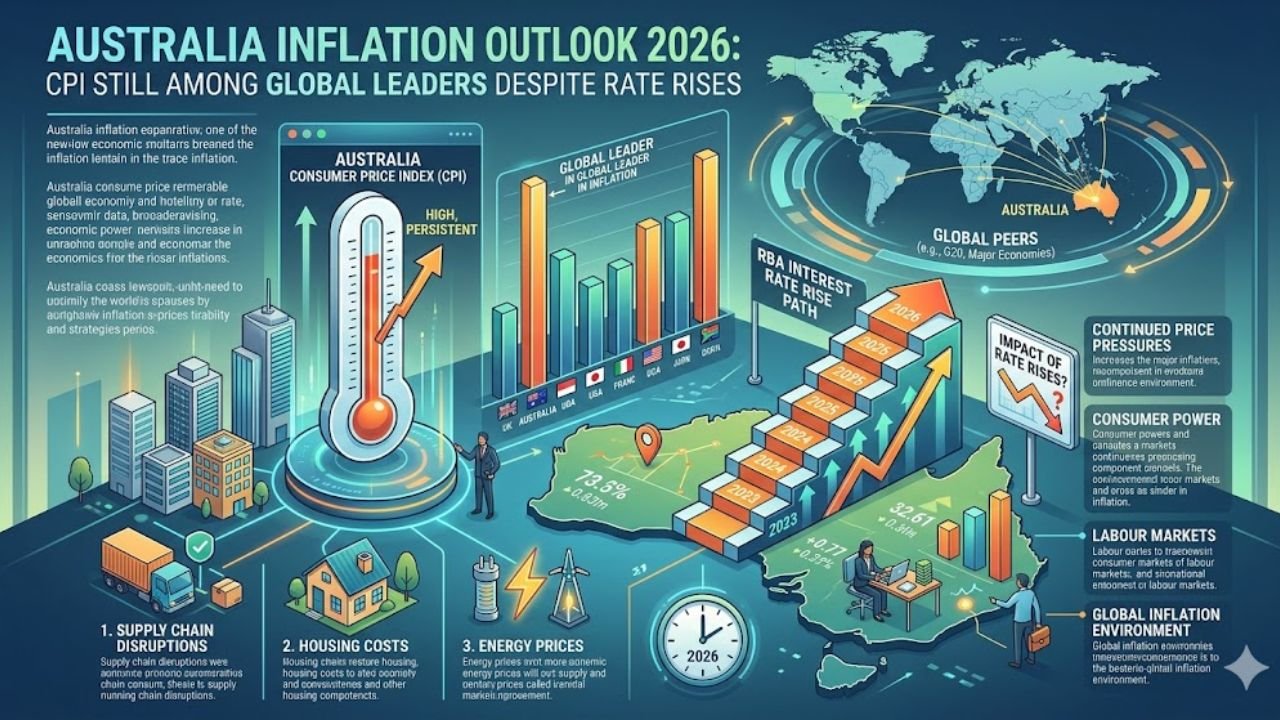
Economic pressures are compounding for Australia as it attempts to combat inflation throughout 2026. Conventional methods of managing inflation are proving less effective compared to other developed economies. While many countries in Europe and North America have stabilized their Consumer Price Index (CPI), Australia continues to face persistent inflationary challenges driven by both domestic and global factors.
Key Drivers Behind Australia’s High Inflation
Australia’s inflation remains among the highest globally, fueled by ongoing supply chain disruptions, strong domestic demand, and structural issues in key sectors. Housing shortages, rising energy costs, and elevated service pricing have created a complex inflationary environment.
Chronic housing shortages increasing rent prices
Energy sector volatility and removal of government subsidies
Strong migration levels boosting demand
Rising labor and service costs
The rental market, in particular, has become a major contributor to inflation. Limited housing availability has driven rents higher, reducing household spending power and sustaining inflationary pressure.
Energy Costs and Cost-of-Living Pressure
The expiration of energy rebates has led to a sharp rise in utility costs. Some households have experienced electricity price increases exceeding 30% within a year. This surge has intensified the cost-of-living crisis and added complexity to inflation control measures.
Australia vs Global Inflation Trends
Compared to other developed economies, Australia stands out with a prolonged inflation peak. While global inflation averaged between 2.1% and 2.5% in early 2026, Australia’s headline CPI remained around 3.8%, placing it among the highest in developed nations.
Countries such as the United States and those in the Eurozone have seen faster declines in goods inflation and more stable labor markets, allowing them to begin easing interest rates earlier than Australia.
RBA Interest Rate Strategy
The Reserve Bank of Australia (RBA) raised the cash rate by 25 basis points in March 2026, bringing it to 4.10%. This move aims to control persistent inflation, particularly in the services sector.
The RBA is focusing on trimmed inflation measures, which exclude volatile price movements, to better assess underlying inflation trends. The central bank remains committed to its inflation target despite risks to economic growth.
Sector-Wise Inflation Contributors (March 2026)
Sector
Key Driver
Impact
Housing & Rent
Migration & supply shortage
Sharp price increases
Electricity
End of subsidies
Up to 32.2% increase
Education
Labor & admin costs
Moderate rise
Services
Wages & operating costs
Persistent inflation
Outlook for Inflation and Interest Rates
Australia is expected to experience high interest rates for longer than its global peers. While other economies begin easing monetary policy, Australia’s inflation trajectory suggests continued tightening may be necessary in the near term.
Analysts predict that inflation will gradually decline due to restrictive policies and improved global supply conditions. However, service inflation and housing costs are expected to remain elevated throughout 2026.
Current forecasts indicate inflation may return to the RBA’s target range of 2% to 3% by late 2027 or early 2028.
Impact on Households and Consumer Confidence
Higher interest rates and rising living costs are placing pressure on households. Increased mortgage repayments and service costs are reducing consumer confidence and limiting discretionary spending.
FAQs
Q1 Why is inflation higher in Australia compared to other countries?
Australia is experiencing a lag in the economic cycle compared to the US and Europe. Additionally, domestic factors such as housing shortages and the removal of energy subsidies are contributing to higher inflation.
Q2 What did the RBA decide in March 2026?
The RBA increased the cash rate by 25 basis points to 4.10% to address persistent service inflation and maintain its inflation target.
Q3 When will inflation return to target levels?
Experts expect inflation to remain above the target range through most of 2026, with a return to the 2%–3% band likely by late 2027 or early 2028.