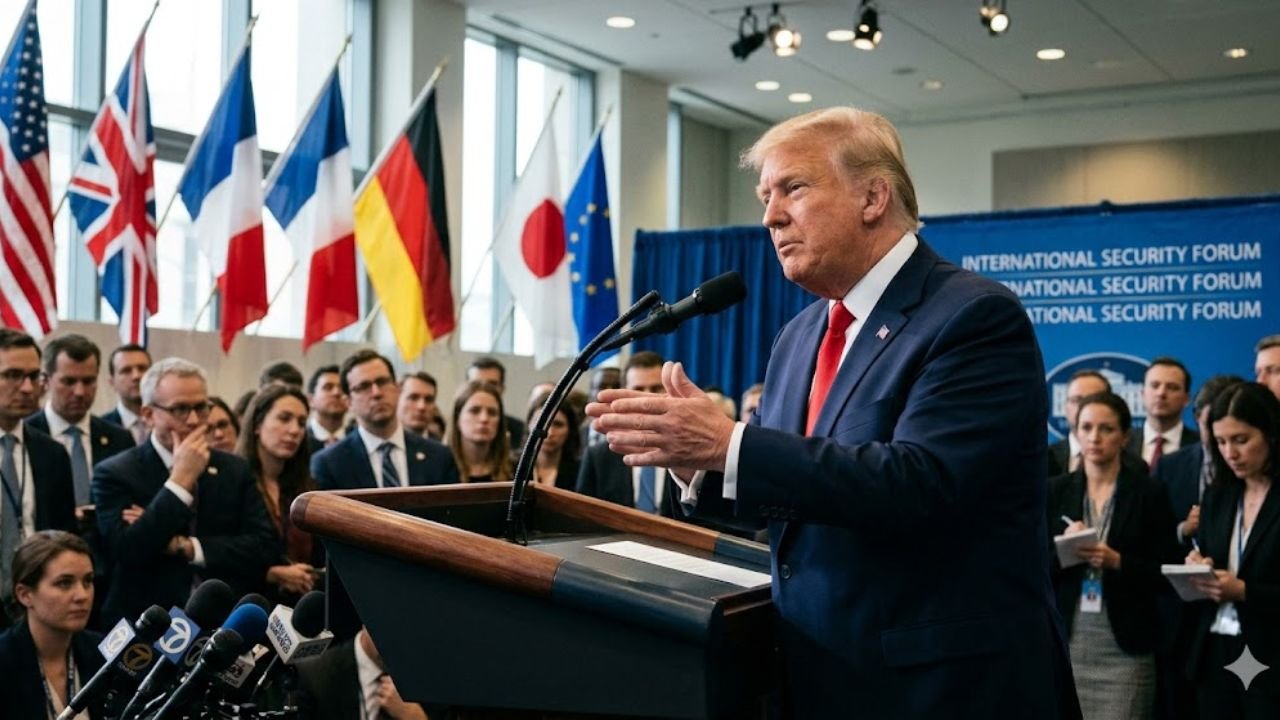
A large-scale reconfiguration of global diplomacy emerged when President Trump signaled the need for an international coalition to address Iran’s nuclear ambitions and regional threats. This marked a notable shift from earlier “America First” rhetoric, which had often downplayed the role of traditional allies in Europe and the Indo-Pacific.
The administration’s renewed call for cooperation highlights the necessity of global participation in enforcing stricter economic sanctions and ensuring maritime security in critical areas like the Strait of Hormuz. While U.S. economic power remains influential, containing a state actor such as Iran requires coordinated international support.
History of U.S. Policies and Diplomatic Reversals
Recent policy decisions reflect a departure from multilateral agreements, particularly the withdrawal from the JCPOA, toward a bilateral pressure strategy. This “go-it-alone” approach left key European allies—especially the London, Paris, and Berlin grouping—to maintain regional stability without clear direction from Washington.
The introduction of a “Global Maximum Pressure” strategy has received mixed reactions internationally. While some allies express cautious optimism, others remain skeptical due to concerns over consistency and long-term U.S. commitment.
Challenges in Rebuilding Trust
For this renewed diplomatic outreach to succeed, the U.S. must prioritize rebuilding trust. This involves moving beyond transactional diplomacy and engaging meaningfully with allies’ security concerns. Establishing a durable trust framework will require sustained communication and a long-term commitment to multilateral engagement.
Countries in the Middle East and Europe, given their geographic proximity to potential conflict zones, expect the U.S. to demonstrate sensitivity to their security priorities.
Shifting Sanctions and Enforcement Mechanisms
The U.S. has increasingly pushed for a global compliance system that challenges existing trade norms, particularly concerning Iran. Secondary sanctions have significantly impacted Iran’s economy, yet loopholes such as “ghost fleets” and alternative trade networks continue to sustain its oil exports.
To counter this, Washington proposes coordinated naval operations and enhanced international monitoring—a form of collective enforcement that lacks clear precedent in global governance.
Category
Current Fragmented Enforcement
Proposed Global Unified Front
Crude Oil Export Leakage
15–20% via grey market
Less than 3%
Maritime Security Cost
80% borne by U.S. Navy
Shared across 15+ countries
Diplomatic Isolation
Partial, non-aligned bloc remains
Near complete under UN framework
Financial System Access
Barter and peer-to-peer systems
Full SWIFT compliance
Domestic Pressures and the Need for a Grand Bargain
Within U.S. political circles, growing skepticism surrounds the effectiveness of unilateral sanctions. Critics argue that diminishing returns necessitate a broader diplomatic solution.
Experts increasingly advocate for a “Grand Bargain” involving major global and regional stakeholders, including the P5+1 nations and Middle Eastern powers like Saudi Arabia and the UAE. Without such coordination, the risk of miscalculation in the Persian Gulf remains high.
Geopolitical Risks of Re-Engagement
The evolving U.S. strategy also intersects with broader geopolitical dynamics. Iran’s energy partnerships with China and Russia complicate efforts to form a unified global front. Both nations view U.S. pressure campaigns as infringements on their sovereign trade rights.
This tension risks shifting the issue into the realm of great power competition, potentially redefining alliances within the UN Security Council and beyond.
The U.S. continues to promote energy partnerships and trade guarantees, but questions remain about whether these initiatives will translate into a coherent long-term policy framework.
FAQs
Q1 Why is the U.S. seeking allied support now?
Unilateral sanctions have proven insufficient. A coordinated international effort is necessary to effectively target Iran’s grey market activities and secure global shipping routes.
Q2 What is Europe’s position?
European allies share the objective of preventing a nuclear-armed Iran but remain cautious. They seek assurance that the U.S. will maintain a consistent and long-term diplomatic approach.
Q3 How do China and Russia factor in?
China and Russia are key obstacles to a fully unified global front. Both maintain economic and diplomatic ties with Iran, making their cooperation—or neutrality—critical to the success of U.S. strategy.