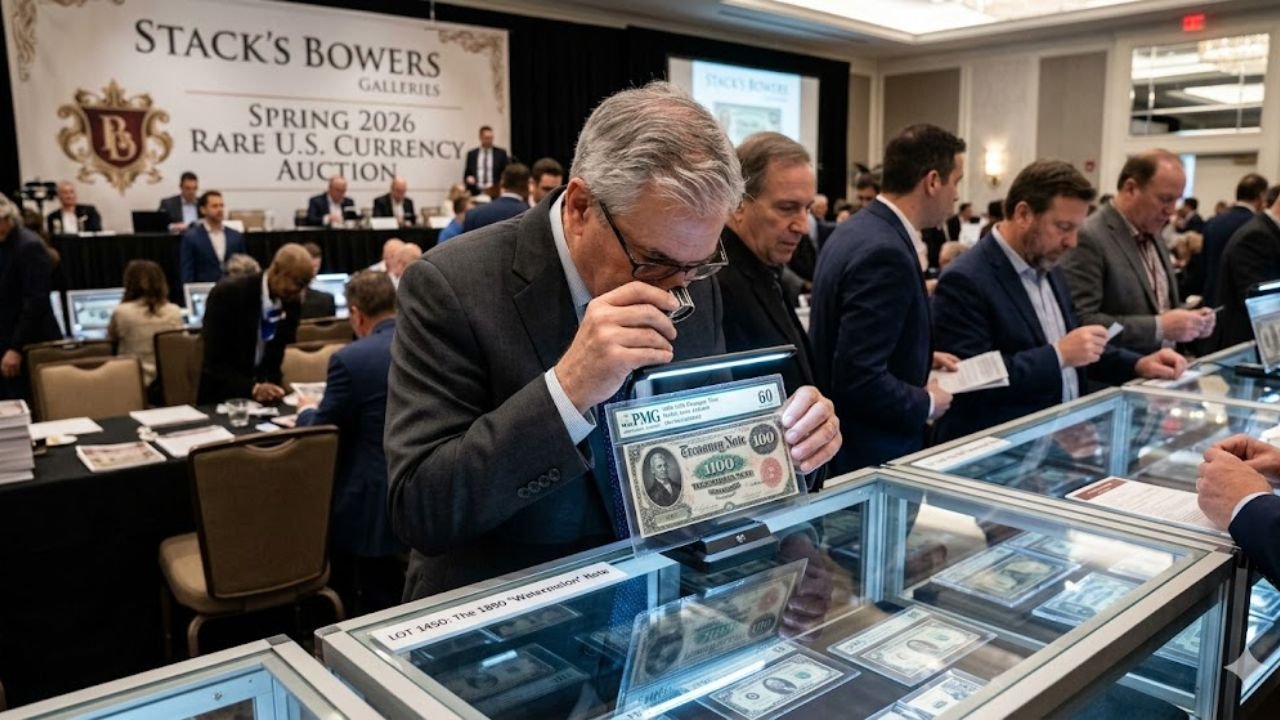
Costa Mesa, California is attracting collectors, dealers, and interested new visitors because of the Spring 2026 Global Showcase Auction of U.S. Currency at Stack’s Bowers Galleries. It is one of the most highly anticipated paper money events of the year. These live and online sessions provide enthusiasts with opportunities to acquire notes that are typically found in sophisticated collections as well as institutional vaults. The event will also help attendees better understand the American currency market in 2026.
Spring Showcase for Currency Enthusiasts
The Spring 2026 Global Showcase Auction marks the first Global Showcase Auction dedicated entirely to United States currency. The collection includes notes from the colonial era, bank issues from the 1800s, and rare examples from the 1900s.
Stack’s Bowers will present this collection on March 12 at their Costa Mesa location at Griffin Studios. Remote bidders will also be able to participate through live online bidding on the Stack’s Bowers website. This digital access allows international bidders to compete equally for items that are often only available once in a generation.
Many attendees also treat the event as an educational experience, as the catalog includes detailed descriptions of each item. These descriptions help collectors, especially newcomers, understand the historical and monetary value of each note.
Colonial, Fractional, and Obsolete Notes Take the Stage
Session 5 of the Spring 2026 sale highlights the beginnings of American paper money, including colonial and Continental issues, fractional currency, and obsolete bank notes. Many pieces are drawn from specialized collections such as the Caine holdings.
Among the highlights is a proof impression from the Bank of Austin and a note from the Bank of Germantown featuring the famous “White Bear” vignette.
Obsolete notes issued by nineteenth-century banks offer collectors a unique opportunity to connect with local banking history. In many cases these notes are the only remaining evidence of banks that once operated in specific cities or states. Even small denomination notes that survived early circulation in strong condition often command competitive bids and set new records within specialized collecting categories.
National Bank Rarities and Replacement Notes
A separate section of the auction focuses on National Bank Notes, where rarity often depends more on the issuing bank than the denomination printed on the note.
One notable example is the Type 2 five-dollar National Bank Note from the National Bank of Palisades Park. The note is considered unique based on its issuing charter and has never been offered in a public auction before.
The sale also includes notes from rarely encountered Bergen County charter banks such as Lodi and Tenafly. These notes provide specialists in New Jersey banking history the opportunity to fill long-standing gaps in their collections.
Replacement notes will also appear in the auction. These notes were printed to replace damaged notes in circulation and are typically produced in very small quantities. Because of their limited production numbers and distinctive serial numbering, replacement notes are highly desirable among both advanced collectors and dedicated specialists.
Spring 2026 U.S. Currency Sessions Overview
| Category | Example | Unique Aspects |
|---|---|---|
| Colonial and Obsolete Notes | Bank of Germantown “White Bear” obsolete note | Artistic vignette and regional historical significance |
| National Bank Rarities | Type 2 $5 Palisades Park National Bank Note | Unique issuing charter |
| Replacement Legal Tender | Finest known $1 1928 replacement Legal Tender Note | Top-graded replacement type |
| High-Denomination Gold Certificates | 1928 $500 and $1000 Gold Certificates | High face value with certified Uncirculated grades |
Collection of Gold Certificates and Icons of Manhattan Beach
Session 7, positioned as part of the Rarities Night offerings, features selections from the well-known Manhattan Beach Collection, a name already familiar to specialists in elite U.S. paper money.
The session is led by the finest known replacement one-dollar Legal Tender Note from the 1928 series. The note is associated with circulation in Puerto Rico during the late 1940s and is highly sought after because of its exceptional condition and rarity.
Another important highlight is a replacement one-hundred-dollar Federal Reserve Note with serial number 1. This note previously belonged to the John Whitney Walter Collection and returns to auction with a stronger provenance record.
The session also includes high-grade 1928 gold certificates in the five-hundred-dollar and one-thousand-dollar denominations. These notes have been verified as Gem and Choice Uncirculated by third-party grading services and appeal to collectors interested in financial history and high-ranking registry sets.
Why This Auction Matters for Modern Collectors
For serious collectors of paper money, the Spring 2026 Stack’s Bowers auction represents more than just a buying opportunity. It also serves as an indicator of the current strength and future direction of the U.S. paper money market.
The event combines live and online bidding, competitive registry participation, and a global collector audience. Auction results will help determine the market premiums associated with material from the Manhattan Beach Collection, unique National Bank charters, and top-graded replacement notes.
Collectors often use post-auction data to set future budgets, refine want lists, and decide whether to consign similar material to upcoming auctions. The event also demonstrates how numismatic coverage can perform well in Google Discover when articles provide expert insights, original reporting, and detailed analysis of the collectible market.
FAQs
Q1 Where will the Stack’s Bowers Spring 2026 U.S. Currency Auction take place?
The live auction will be held at Griffin Studios in Costa Mesa, California. Online bidding will also be available through the Stack’s Bowers website.
Q2 What types of notes will be featured in the auction?
The auction will include colonial and Continental issues, fractional currency, obsolete bank notes, National Bank Notes, replacement notes, and high-denomination gold certificates.
Q3 Can new collectors participate in the auction?
Yes. Registered bidders can watch and place bids online from anywhere. The auction catalog also includes detailed descriptions that help new collectors learn about the rarity and historical significance of each note.